Key Details
- Address: 4040-4042 17th Street, San Francisco, CA 94114
- Price: $2,290,000
- Bedrooms: 5 (configured as two flats: 3BR + 2BR)
- Bathrooms: 2 (one per flat)
- Square Footage: 3,475
- Year Built: 1902
- Architects: John T. Kidd and William J. Anderson (Kidd & Anderson)
- Style: Queen Anne (Free Classic variant)
- Exterior Materials: Redwood siding and shingles, plaster ornament
- Landmark Status: San Francisco Landmark No. 208
- Listing Agents: David Lasker and Joseph Grebel, Vanguard Properties
- Property Website: sfmccormickhouse.com
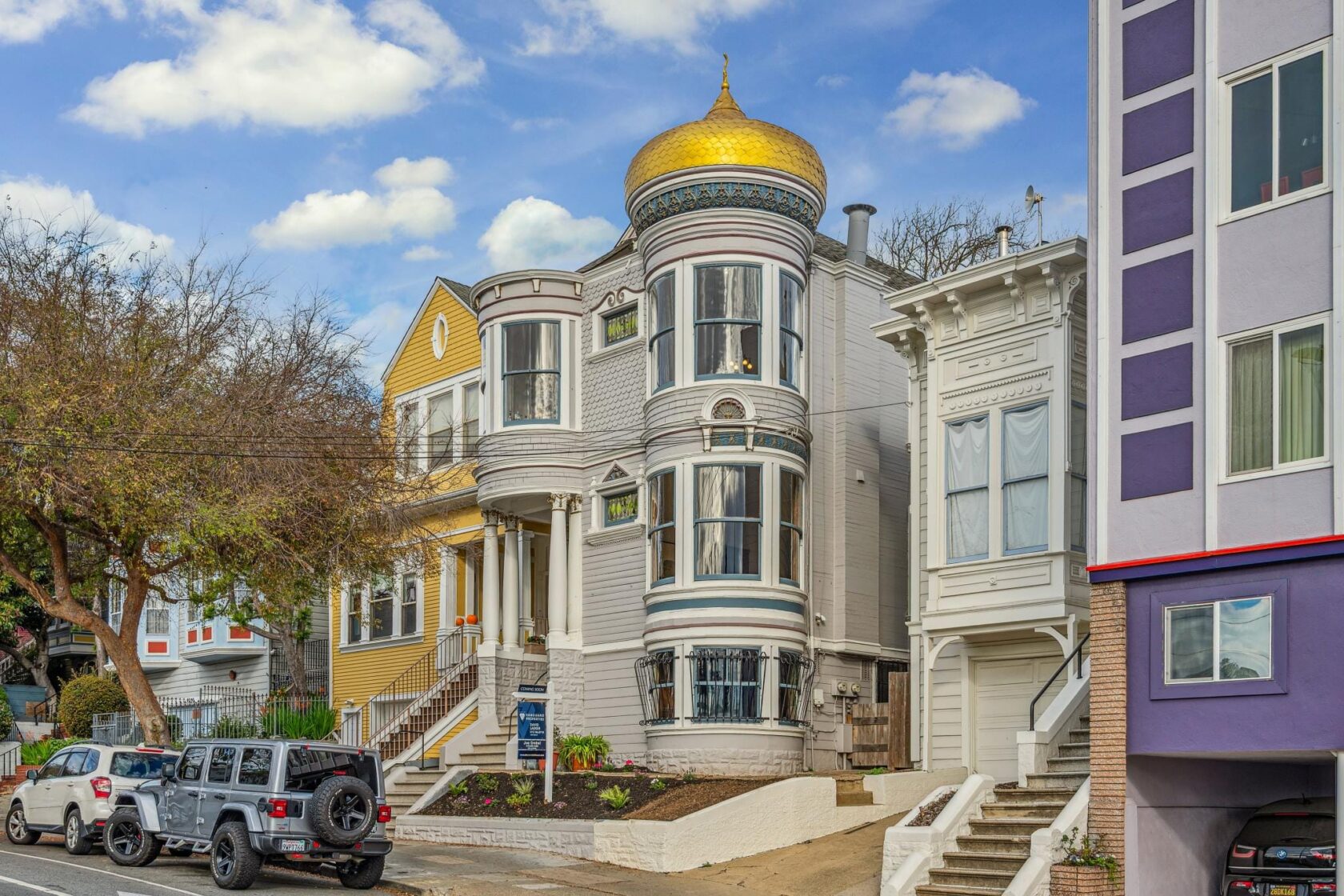
The McCormick House’s gold dome has been a Castro District landmark since 1902, visible from blocks away and instantly recognizable as one of San Francisco’s most distinctive Victorians.
A rare architectural treasure in San Francisco’s Castro District
Look up while walking through San Francisco’s Castro District, and you’ll spot something extraordinary: a gleaming gold onion dome crowning a Victorian tower. This is the McCormick House, and it’s been turning heads for 122 years.
The McCormick House represents one of the city’s most significant surviving examples of High Queen Anne architecture. On the market for the first time in over 50 years for $2,290,000, this San Francisco landmark provides a rare opportunity to steward a building that has shaped the city’s architectural landscape for over a century.
Built in 1902 by architectural firm Kidd & Anderson for insurance salesman John W. McCormick, this 3,475 square foot residence is widely recognized by its gold onion dome—a striking architectural statement visible from blocks away. But this building isn’t just eye-catching : it weathered the 1906 earthquake, witnessed historic economic depression, and passed through generations of preservation-minded owners.
Historical significance and earthquake survival
The McCormick House holds particular importance as one of the few surviving examples of pre-1906 Queen Anne architecture in San Francisco. The 1906 earthquake and subsequent fires destroyed more than 28,000 buildings across 490 city blocks, according to a study by the National Oceanic and Atmospheric Administration. The McCormick House’s survival was remarkable.
According to the San Francisco Landmarks Preservation Advisory Board, the property was designated as San Francisco Landmark No. 208 with a unanimous vote in 1999. The move officially recognized the building’s architectural and historical significance.
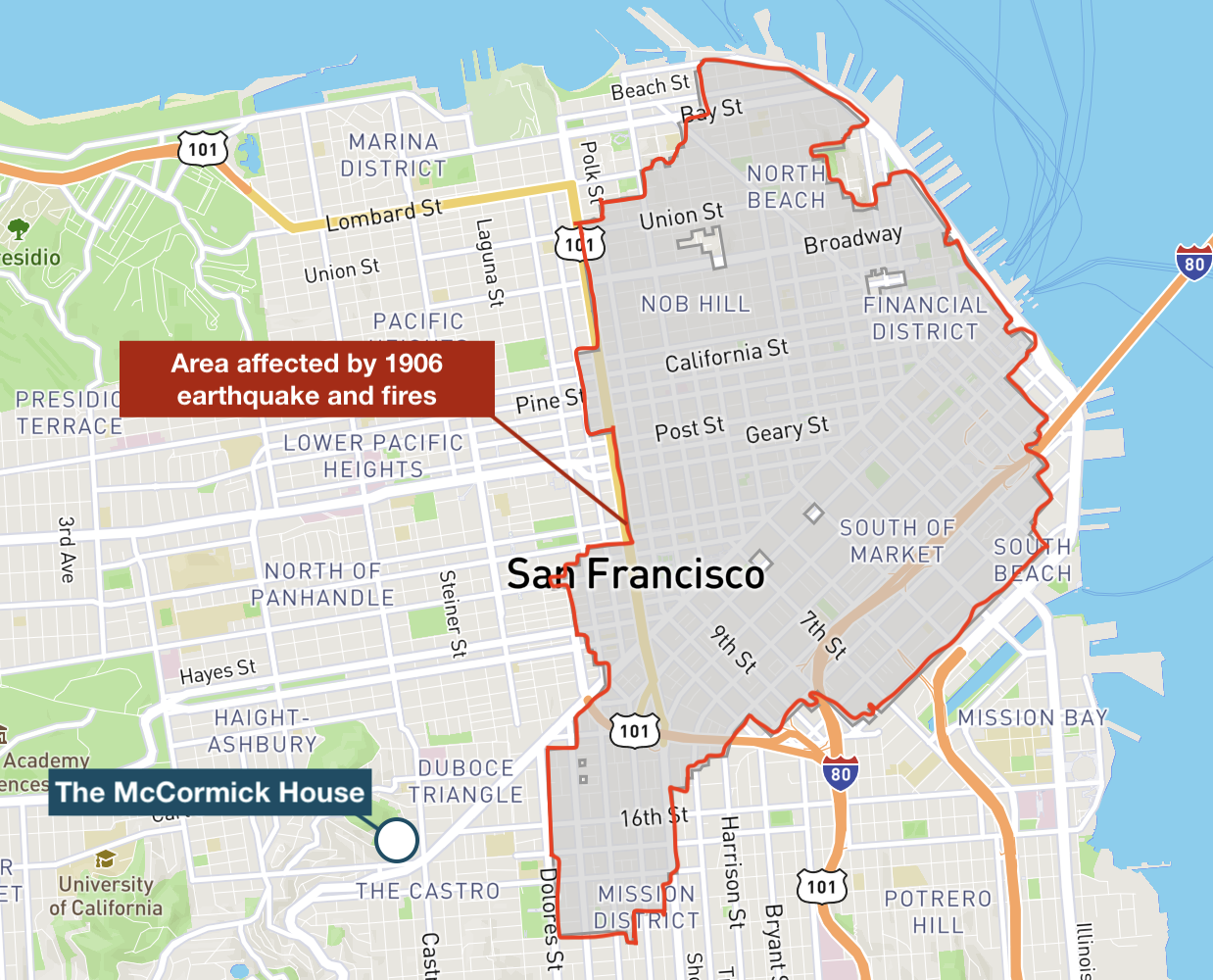
The McCormick House sat just outside the 1906 fire zone (shown in red), which destroyed 490 city blocks over three days. Most damage came not from the earthquake itself, but from the fires that followed.
A signal of economic recovery
The McCormick House was built during an important economic transition. From 1892 to 1902, the United States endured a decade-long depression—the worst before the Great Depression hit in 1929. At this time, the San Francisco building industry had all but come to a screeching halt. In early 1902, however, there was a dramatic turnaround.
“The McCormick House graphically illustrates this pattern of economic history and development,” says the Advisory Board. “John W. McCormick and his family had lived in the modest cottage next door at 4038 17th Street throughout the years of the economic depression. But as soon as the economy began to improve, McCormick built this effusive monument to a suddenly rosier future.”
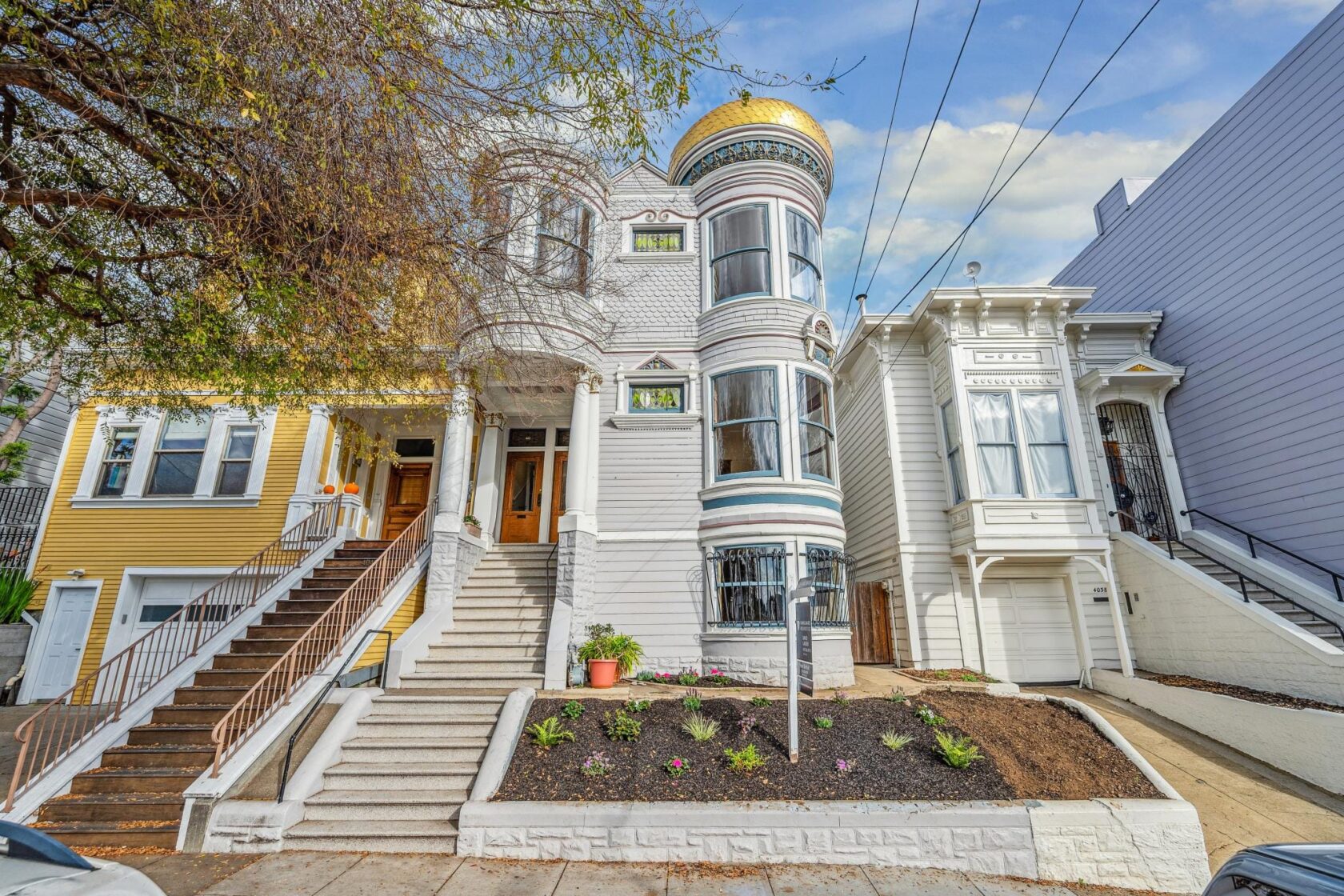
Throughout the depression, John W. McCormick lived in the modest home on the left.When conditions improved, he built the lavish property we now know as the McCormick House.
Ownership history
John W. McCormick and his son lived in the home for approximately 70 years.
In 1913, the property was deeded to thirteen-year-old Claire McCormick and remained in her name until 1972. The Advisory Board states: “Claire McCormick is reported to have been institutionalized for most of her life because of mental incompetency. It is a mystery why the family put the property in her name because her parents and older brother were alive and mentally competent.”
The property was purchased in 1971 by a dedicated conservationist for $30,000. According to Lasker, this owner approached the house “like it simply wasn’t her residence.” Instead, she considered it to be a community treasure. After her death in 2025, a relative initiated the sale. It marks the home’s first availability in 55 years.
Lasker notes that the home does need some updating. “Structurally, the home is great. It has the most extraordinary bones,” he says. However, “it does need some updating, such as electrical and plumbing, and the kitchen.” This type of work, though necessary, will require the new owner to comply carefully with preservation standards.
Architectural excellence
The” Free Classic” Queen Anne style
The McCormick House exemplifies the Free Classic variant of Queen Anne style, which blends classical Greek and Roman architectural elements with the more ornate Queen Anne style. According to the Advisory Board, “Quality of composition and design is this building’s salient virtue. The basic narrow gable front form, which so often results in a flat, angular expression, here becomes positively voluptuous.”

A close-up of the gold onion dome and the blue metalwork band underneath. A sinuous finial (the “S” shaped ornament at the top of the dome) completes the aesthetic.
The distinctive gold onion dome
The unusual onion dome crowning the eastern tower is without a doubt the building’s most recognizable feature. According to listing agent David Lasker of Vanguard Properties in a Realtor.com article, “What makes this house unique is that it lends one of the best surviving examples of high Queen Anne architecture with this gold dome that crowns the building.”
Preserved original features
Both the exterior and interior appear to be almost entirely original to the home. Key preserved elements include:
Exterior:
- Matching round bay and tower creating dimensional complexity unique among San Francisco Victorians
- Curved bay windows with classical columns
- Two leaded glass windows (decorative windows made from pieces of glass joined by lead strips, creating artistic patterns)
- Entrances and steps made with original patent stone (an early concrete-like material)
- Redwood siding and shingles, including fish scale patterns
- A horseshoe-shaped ornamental detail between first and second stories on the tower
- Grouped classical columns and pilasters (decorative vertical supports arranged in pairs or clusters, inspired by Greek and Roman architecture)
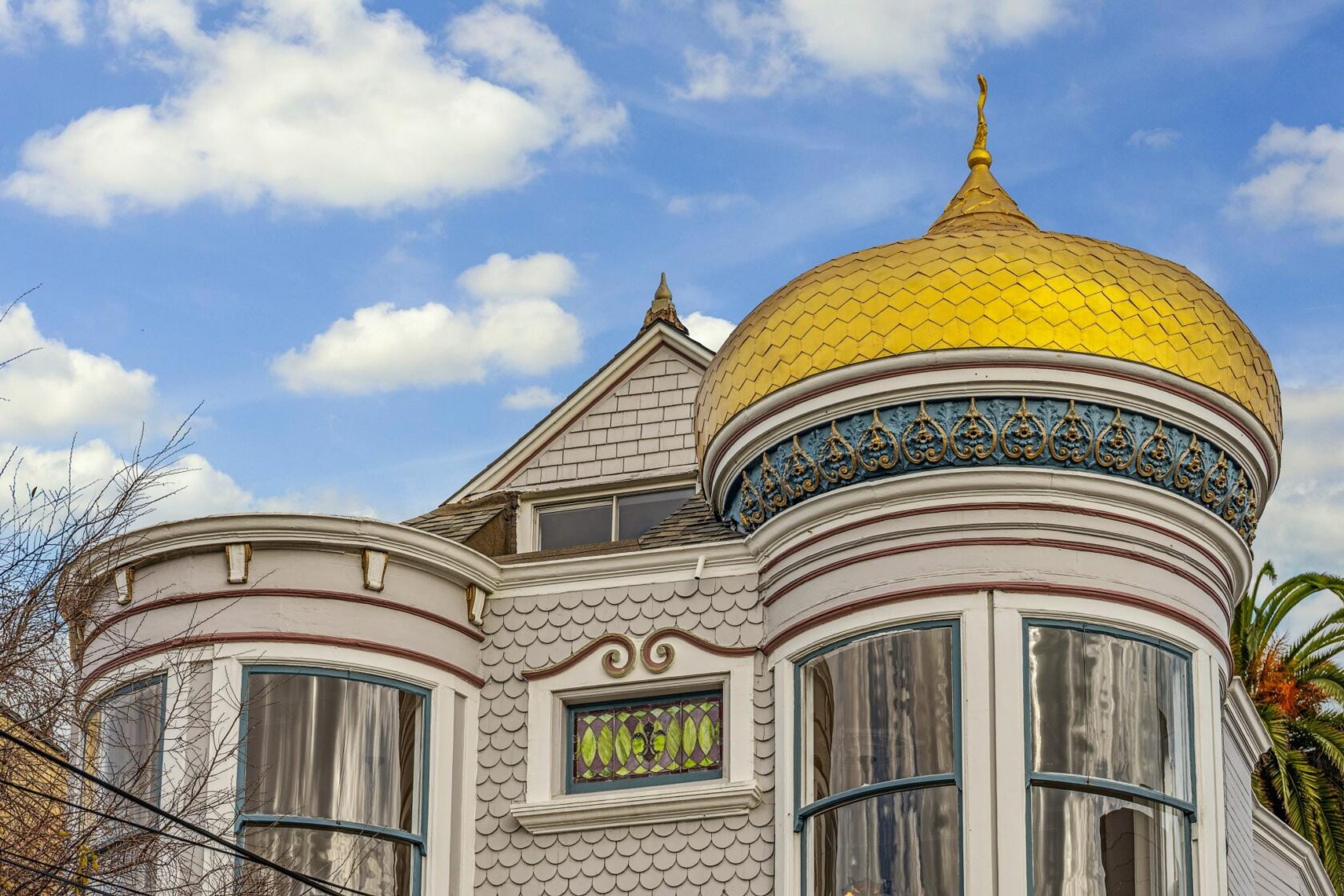
Fish scale pattern shingles adorn part of the second story facade
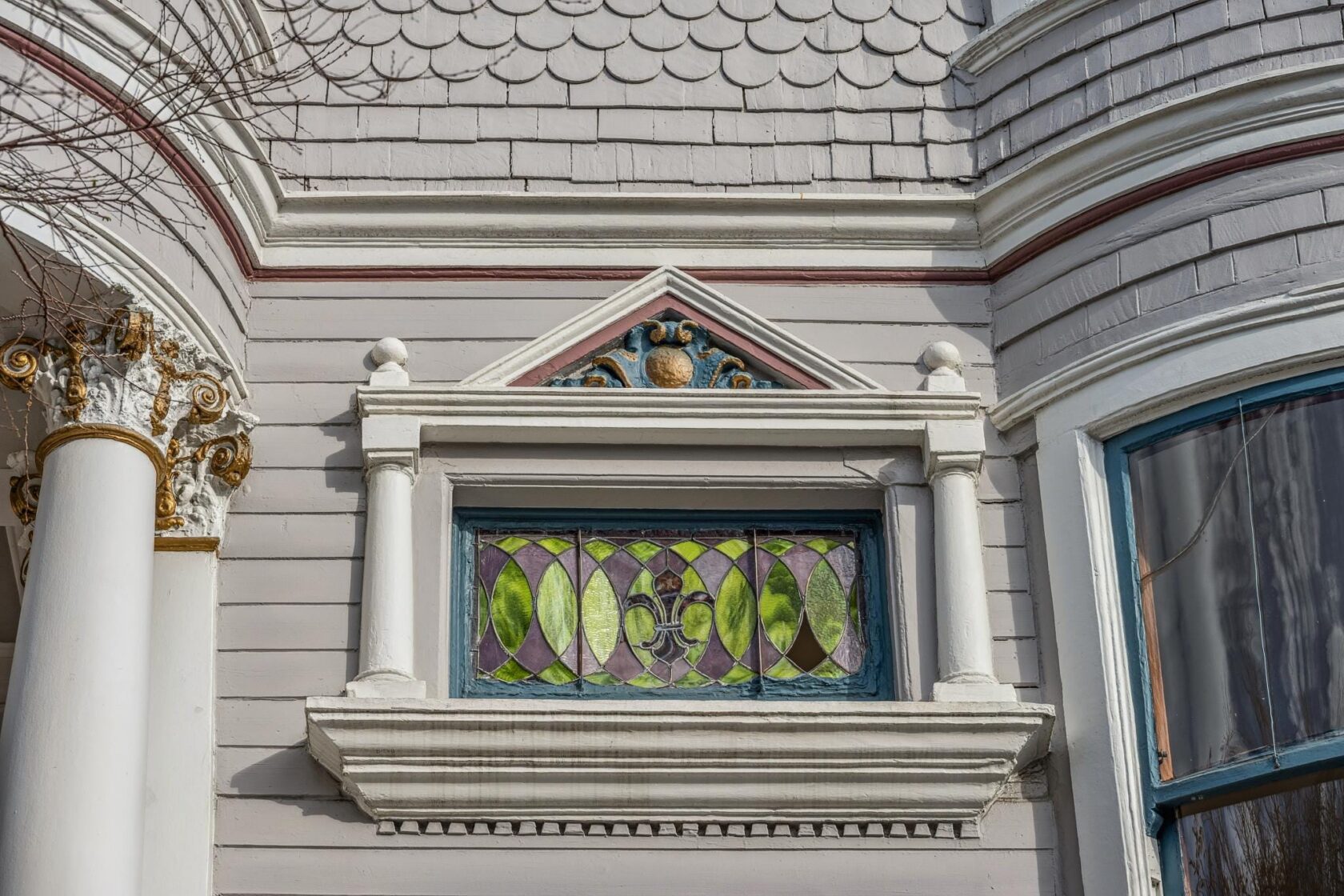
This leaded glass window features green and purple art glass in an intricate pattern. Note the ornate frame with its triangular pediment and miniature columns on either side.
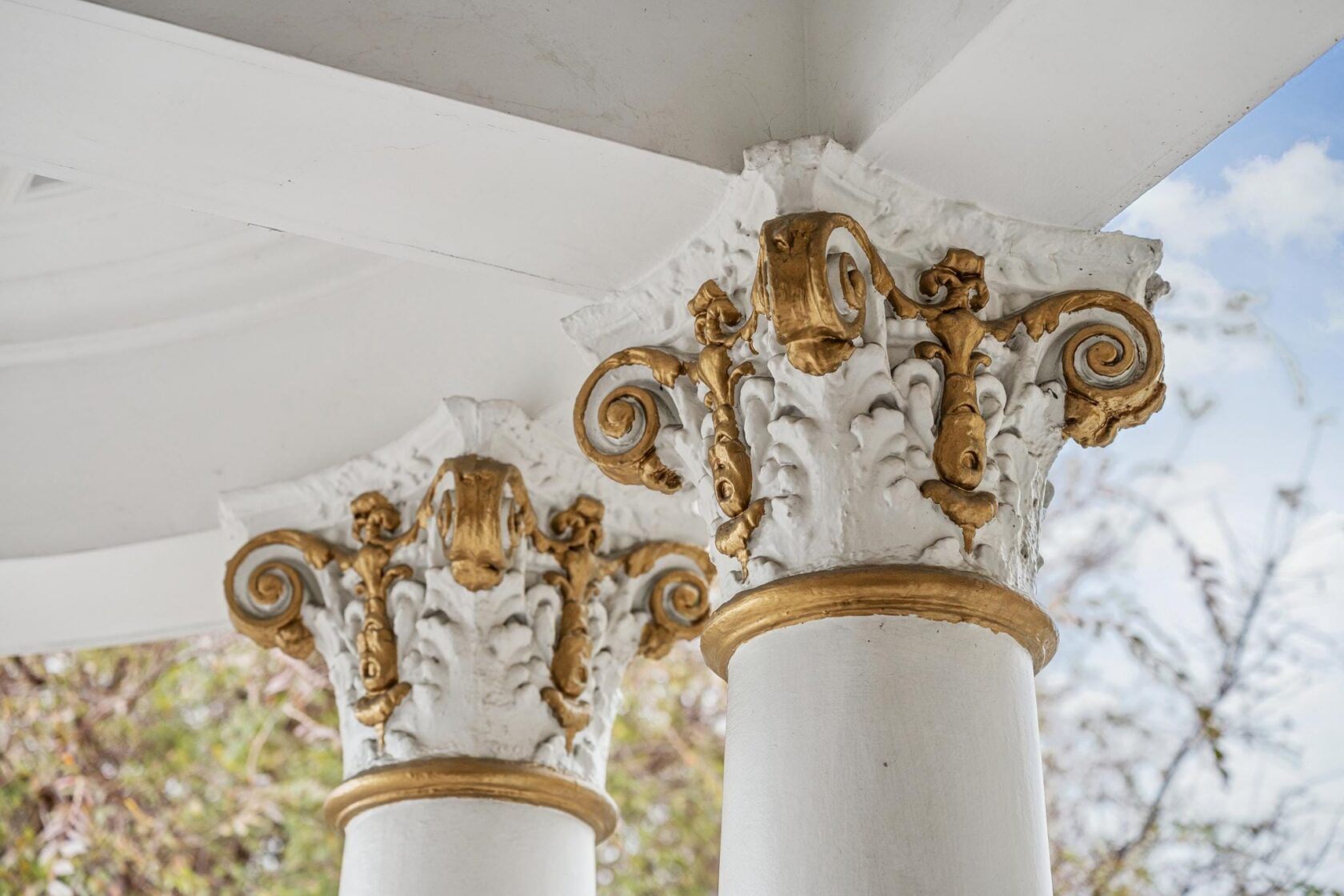
Grouped classical columns with gold accents. These decorative elements were inspired by Greek and Roman architecture.
Interior:
- Original Victorian speaking tubes (brass intercom system from entrance to flats)
- Fine white oak flooring throughout
- Original woodwork, paneling, and mantels
- Curved glass windows with original glazing
- Unaltered floor plan
- Floral patterned molding and ceiling medallions
According to the landmark report, details “such as the brass speaking tubes from the entrance to the flats, the curved glass windows, including the basement level, and the ‘patent stone entrances’ and steps mentioned in the 1902 builder’s notice are still in place.”
Lasker echoed this preservation status, saying: “It’s very much in its original state. It’s unaltered.”
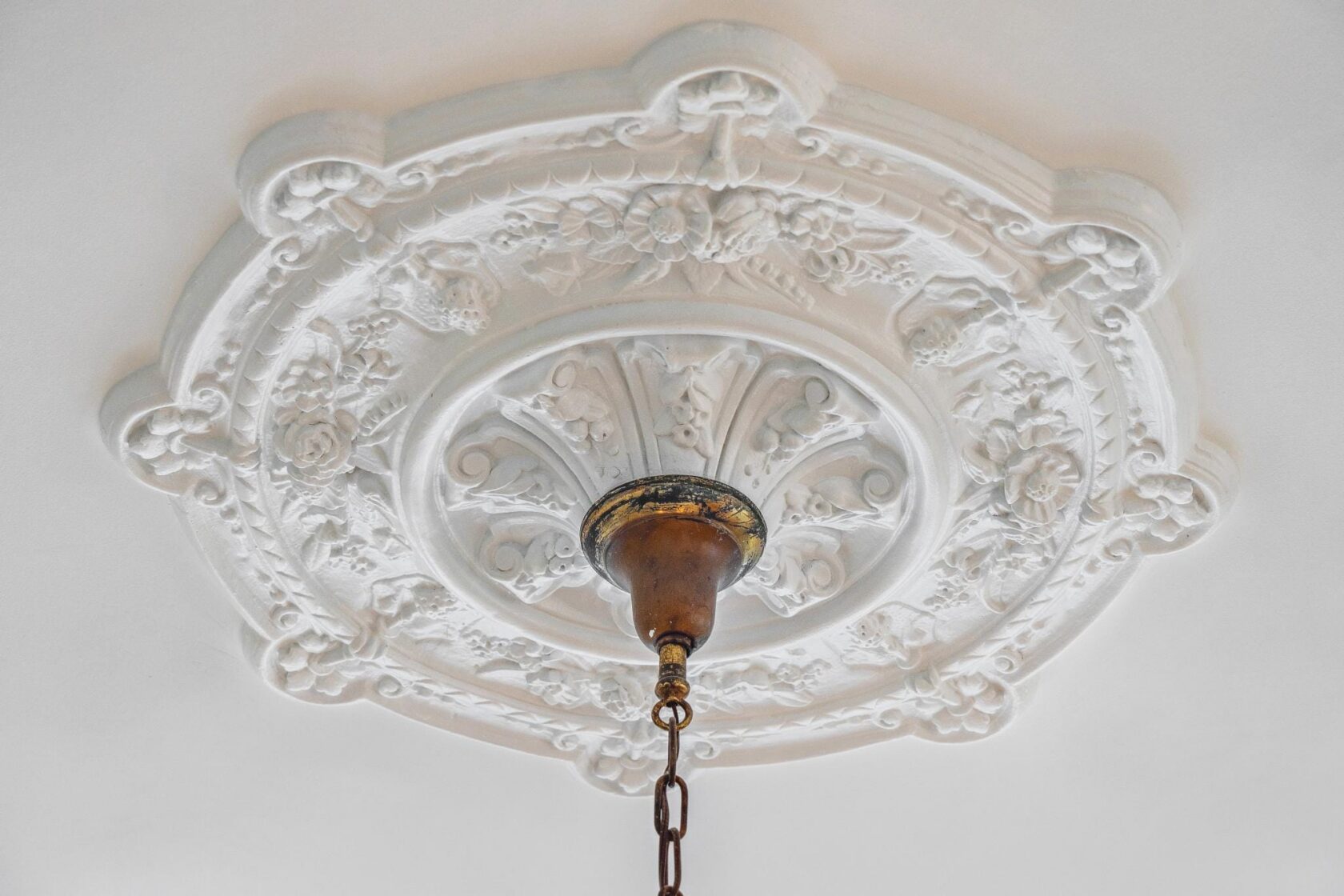
One of multiple floral patterned ceiling medallions. This one features an aged brass canopy and hanging brass chain.
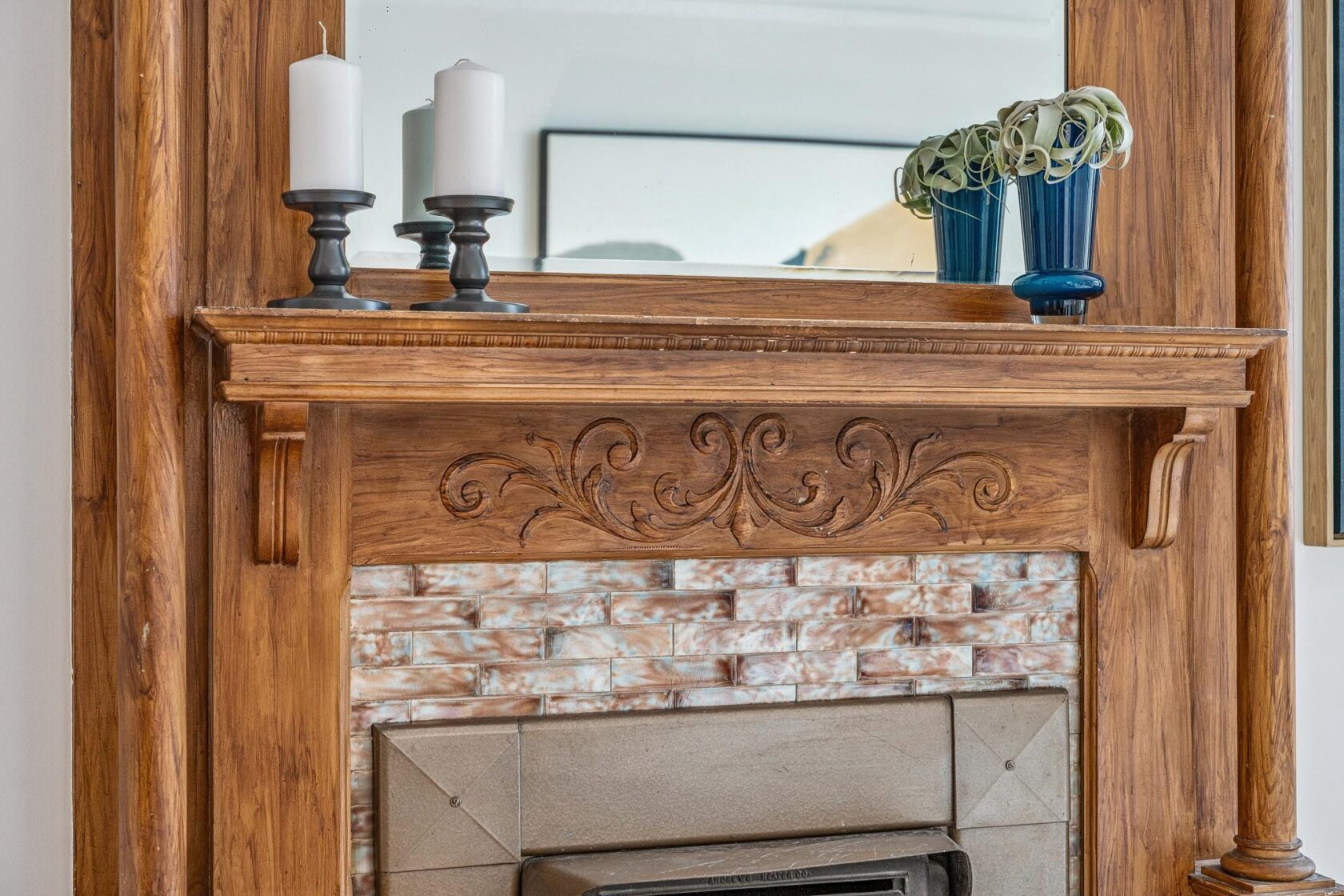
This original mantel made of warm redwood features hand-carved acanthus scroll relief work.
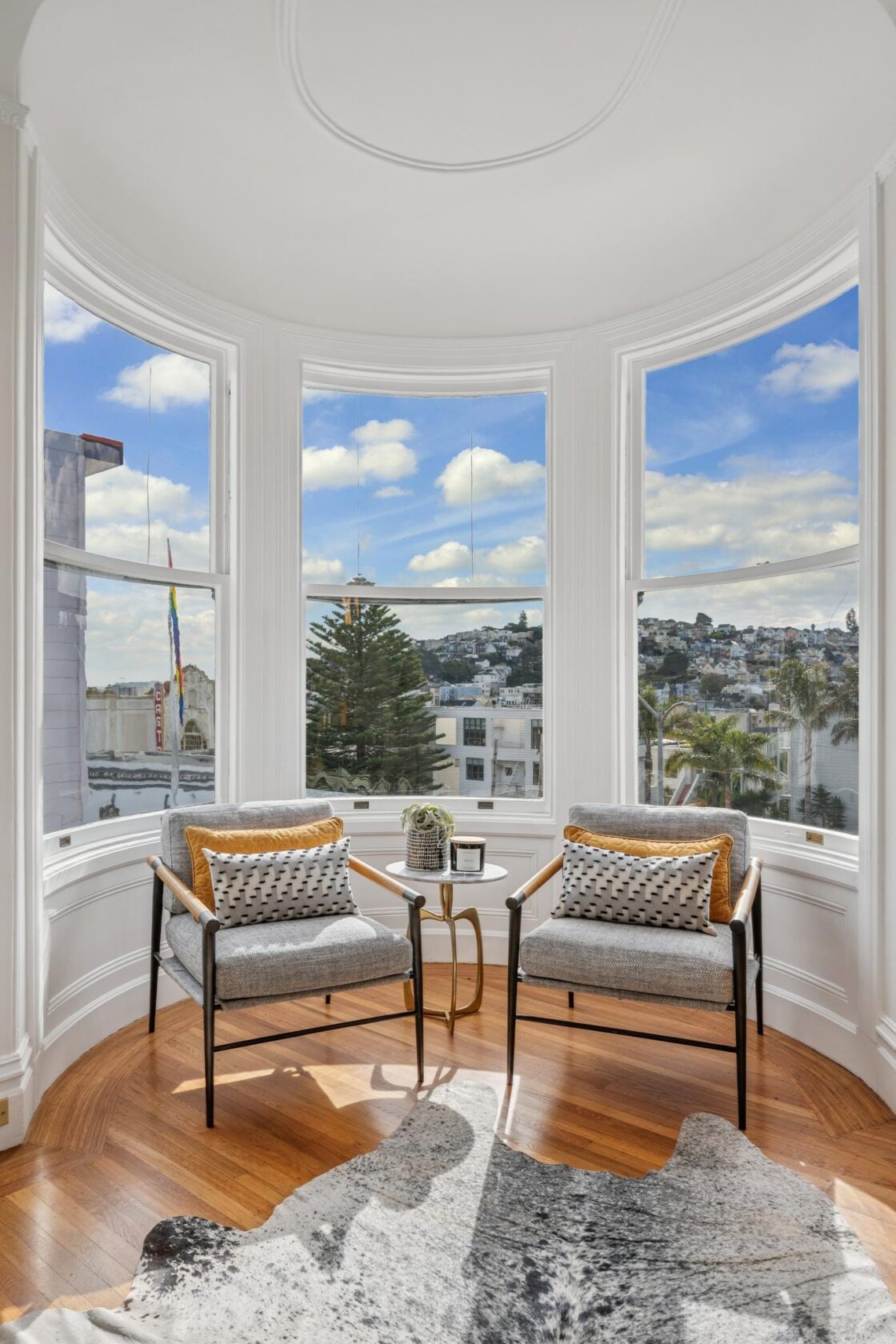
Inside the curved turret bay: curved windows overlook the Castro neighborhood.
About the architects: Kidd & Anderson
Design credit goes to John T. Kidd and William J. Anderson of the firm Kidd & Anderson. According to the landmark report, Kidd, the senior partner, was likely responsible for the design. He was English-born and trained under the respected San Francisco firm of Laver and Curlett. Though he practiced in San Francisco for forty years (1881-1921), his work remains relatively little known. The McCormick House stands as one of the finest examples of his design capabilities.
A unique investment opportunity
At $2,290,000, the McCormick House represents a significant investment in San Francisco’s architectural heritage. The combination of landmark status, exceptional architectural merit, prime Castro location, and international recognition makes it particularly attractive to preservation-minded buyers.
Lasker doesn’t think finding the perfect buyer will be an issue: “There’s definitely a segment of people who have a passion for fixing up homes. Through our open houses, I’ve been meeting all kinds of people who own homes throughout California and have fixed them up.”
Want to learn more about the famous McCormick House? Additional photos, features, and neighborhood information is available at sfmccormickhouse.com.
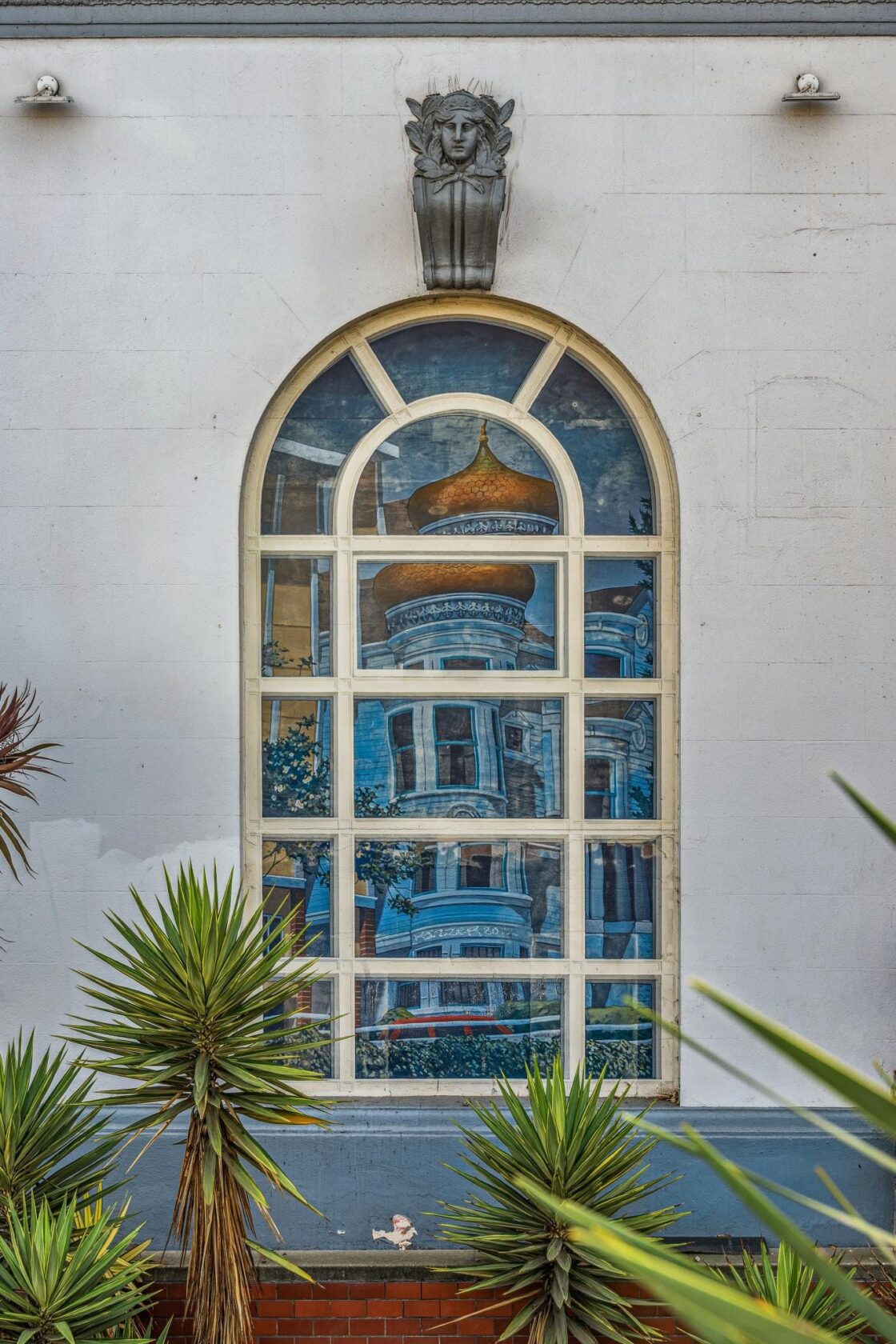
The McCormick House is reflected in a building’s window across the street at Harvey Milk Plaza.
Sources:
- San Francisco Planning Department, Landmarks Preservation Advisory Board. (1999). Final Draft Report: McCormick House, 4040-4042 17th Street, Landmark No. 208. https://sfplanninggis.org/docs/landmarks_and_districts/LM208.pdf
- Hansen, K. (2026, March 1). Historic Gold-Dome-Topped Queen Anne Victorian Is Listed for $2.3 Million—120 Years After Surviving a Major Earthquake. Realtor.com. https://www.realtor.com/news/unique-homes/queen-anne-victorian-san-francisco-gold-dome-earthquake/
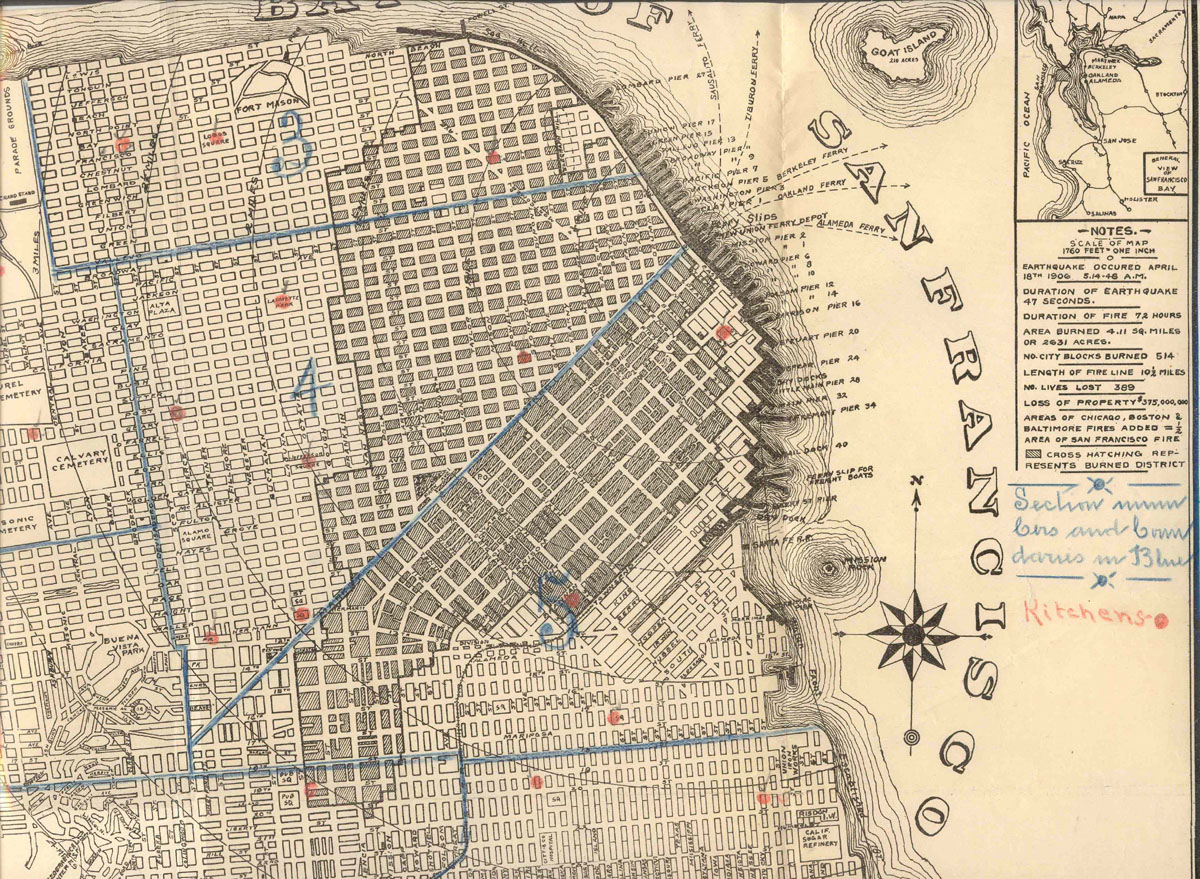
- A study of earthquake losses in the San Francisco Bay area : data and analysis : a report. https://repository.library.noaa.gov/view/noaa/55706
- https://www.archives.gov/files/publications/prologue/2006/spring/images/map-l.jpg