TL;DR:
- Bold cabinet colors in jewel tones (sapphire, emerald) succeed alongside black appliances when every other surface exists to give the eye somewhere to rest.
- The metal finish on black appliances can matter more than the appliance color itself — brass reads warm and timeless, chrome reads cool and modern.
- The darker your cabinets, the more important contrast becomes — stone counters, light floors, or large windows all work, but one of them needs to show up.
- Consistent hardware finish repeated across cabinets, range, and faucet is what separates a cohesive palette from a fragmented one.
- Tone-on-tone black kitchens require abundant natural light; without it, the palette closes in.
Can bold-colored cabinets hold their own against black appliances?
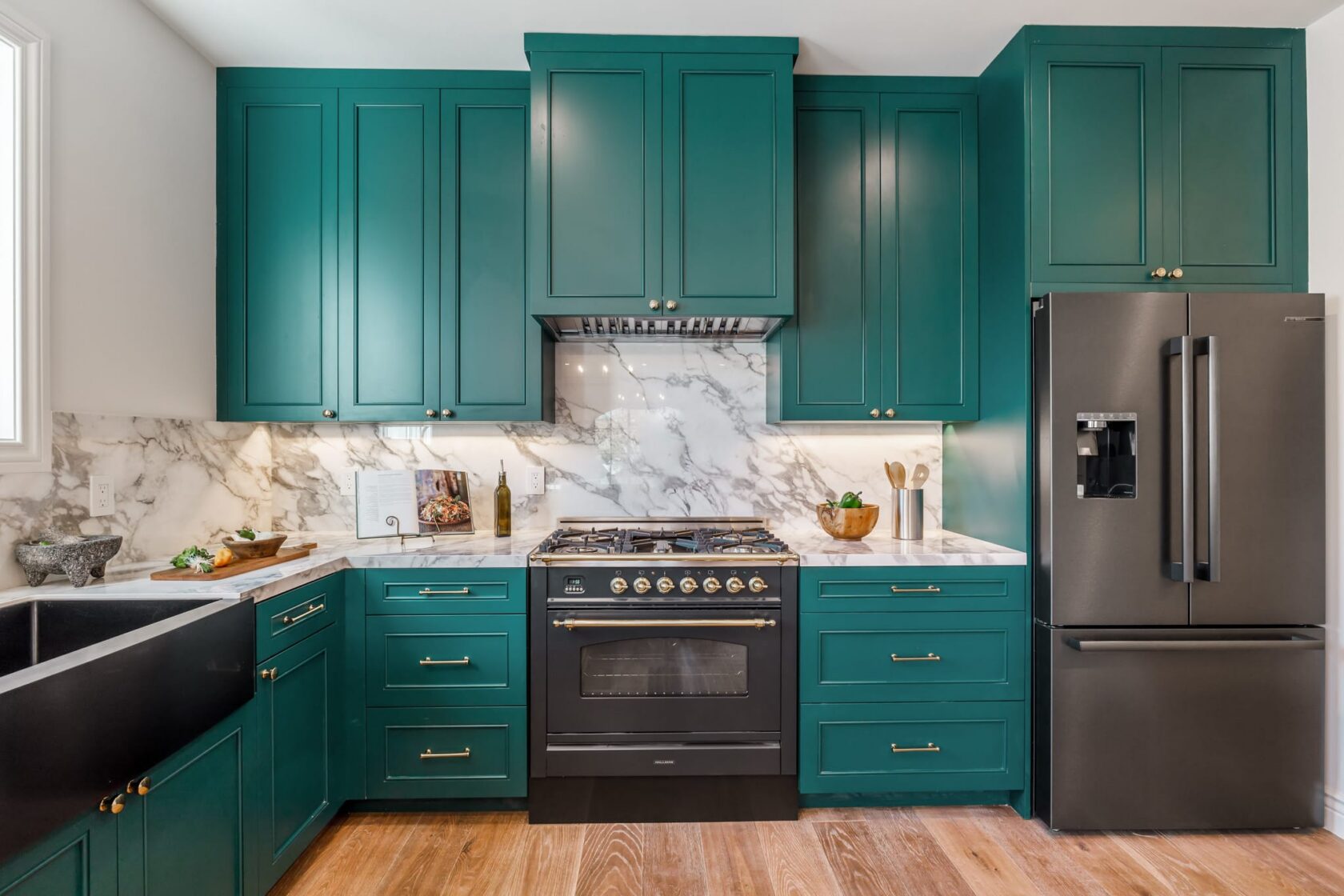
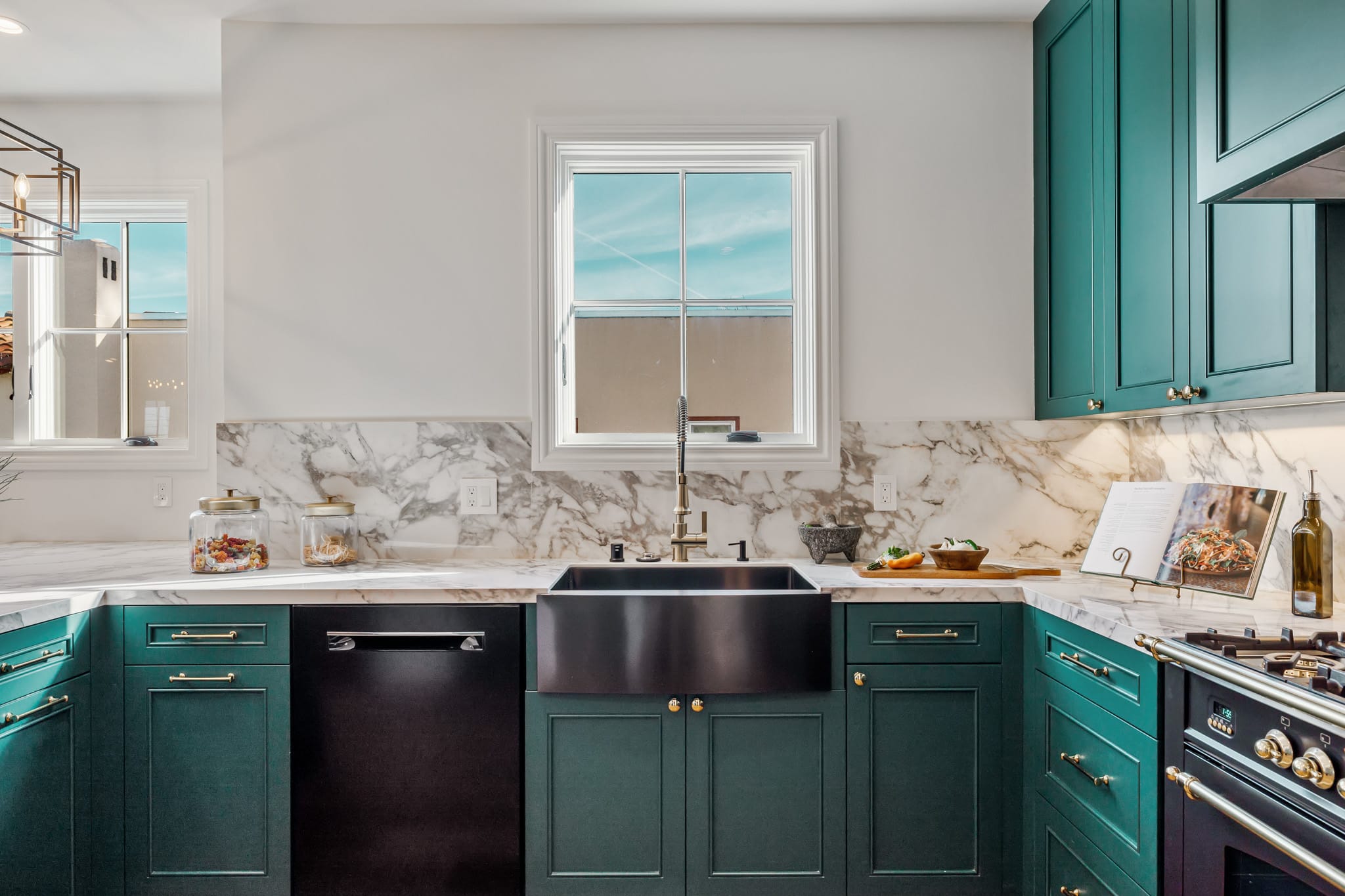
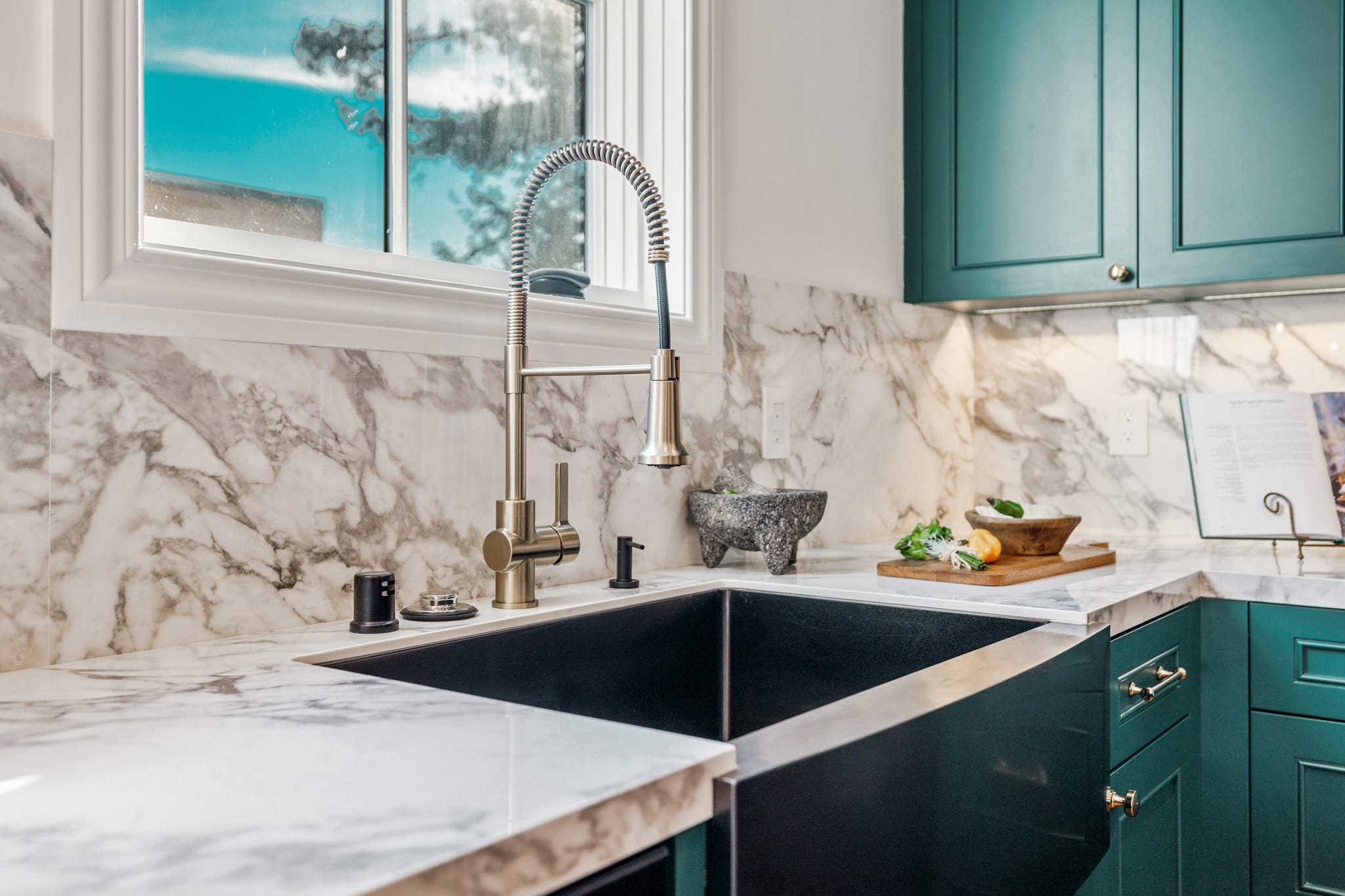
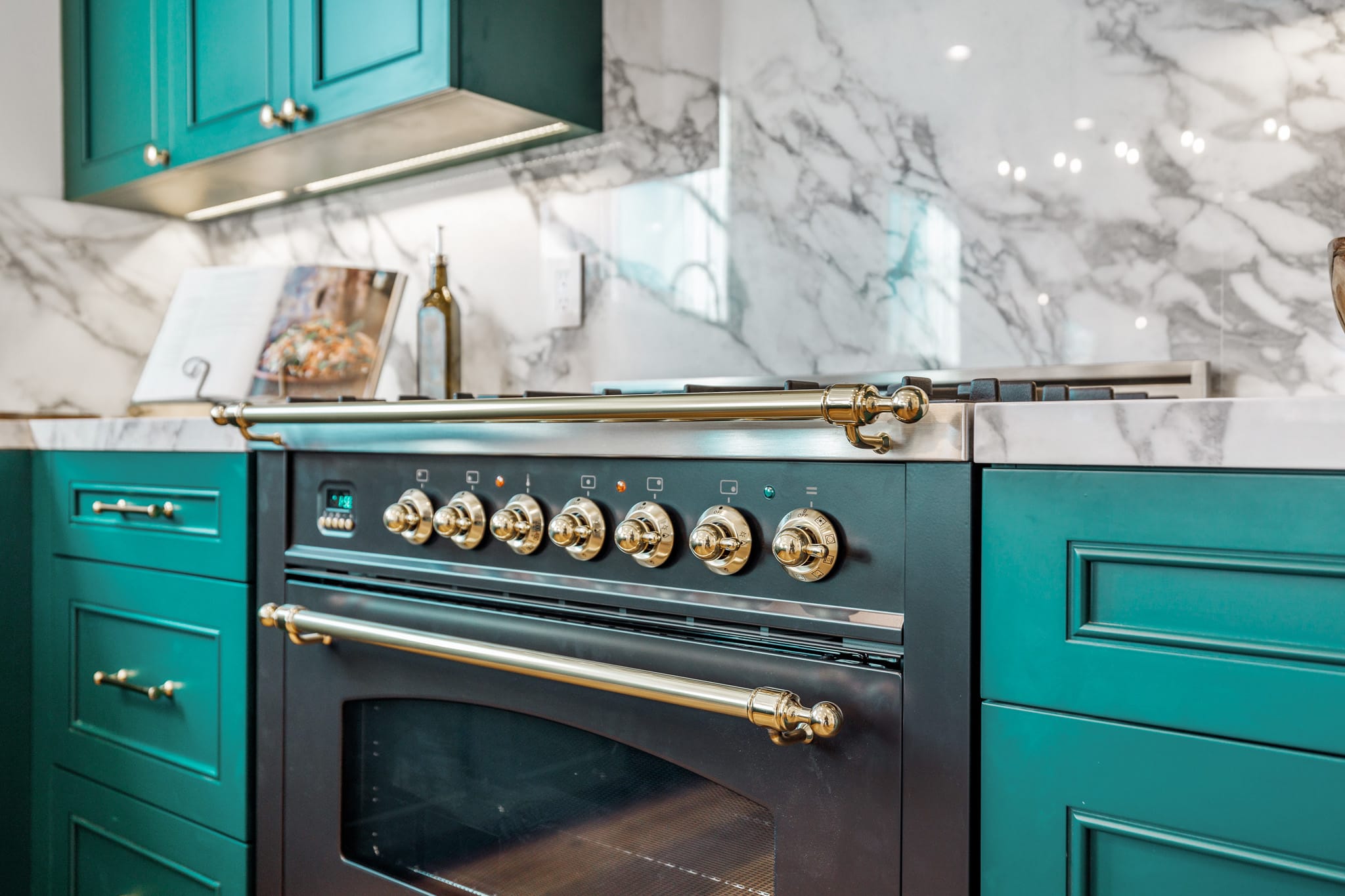
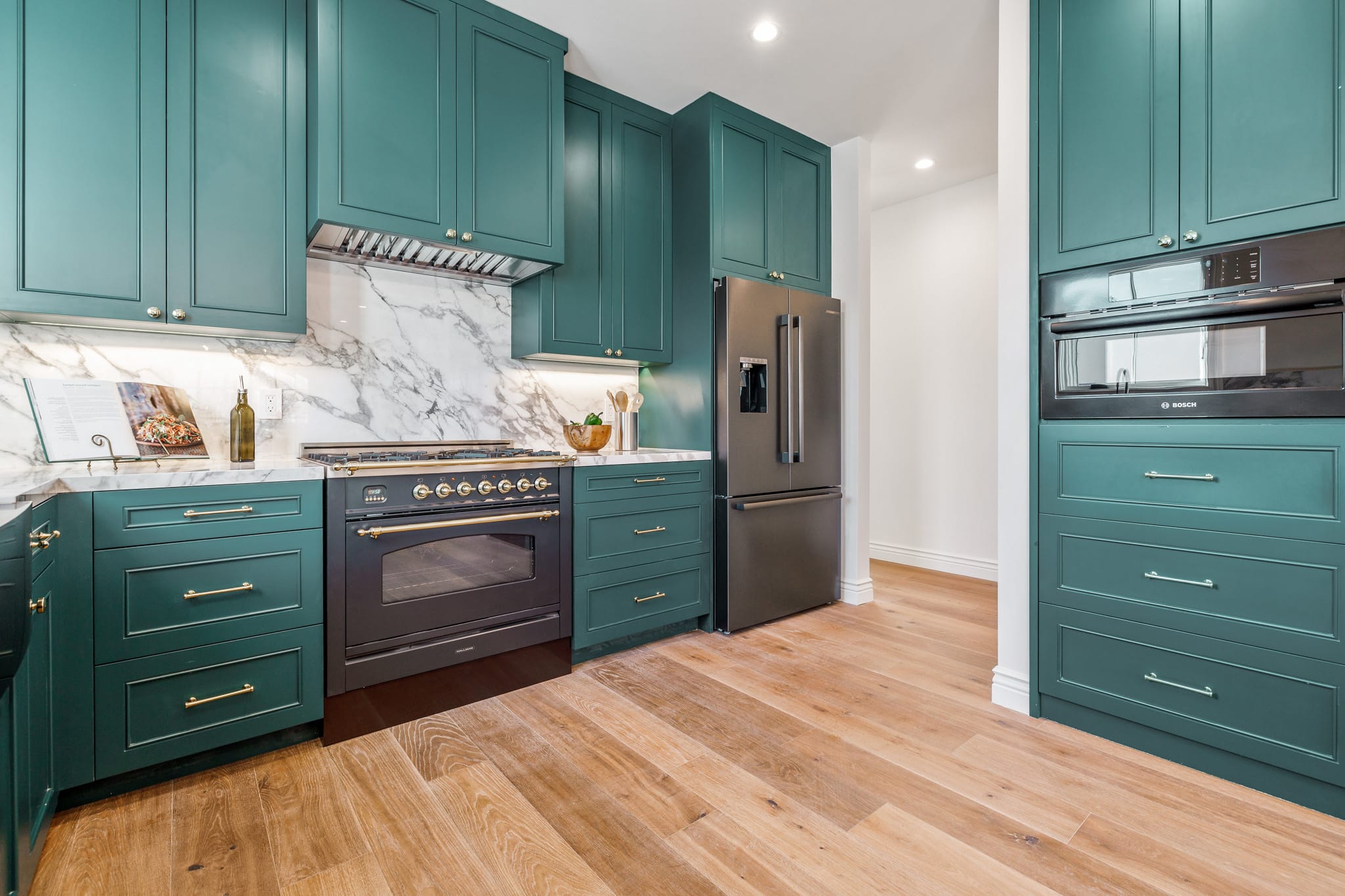
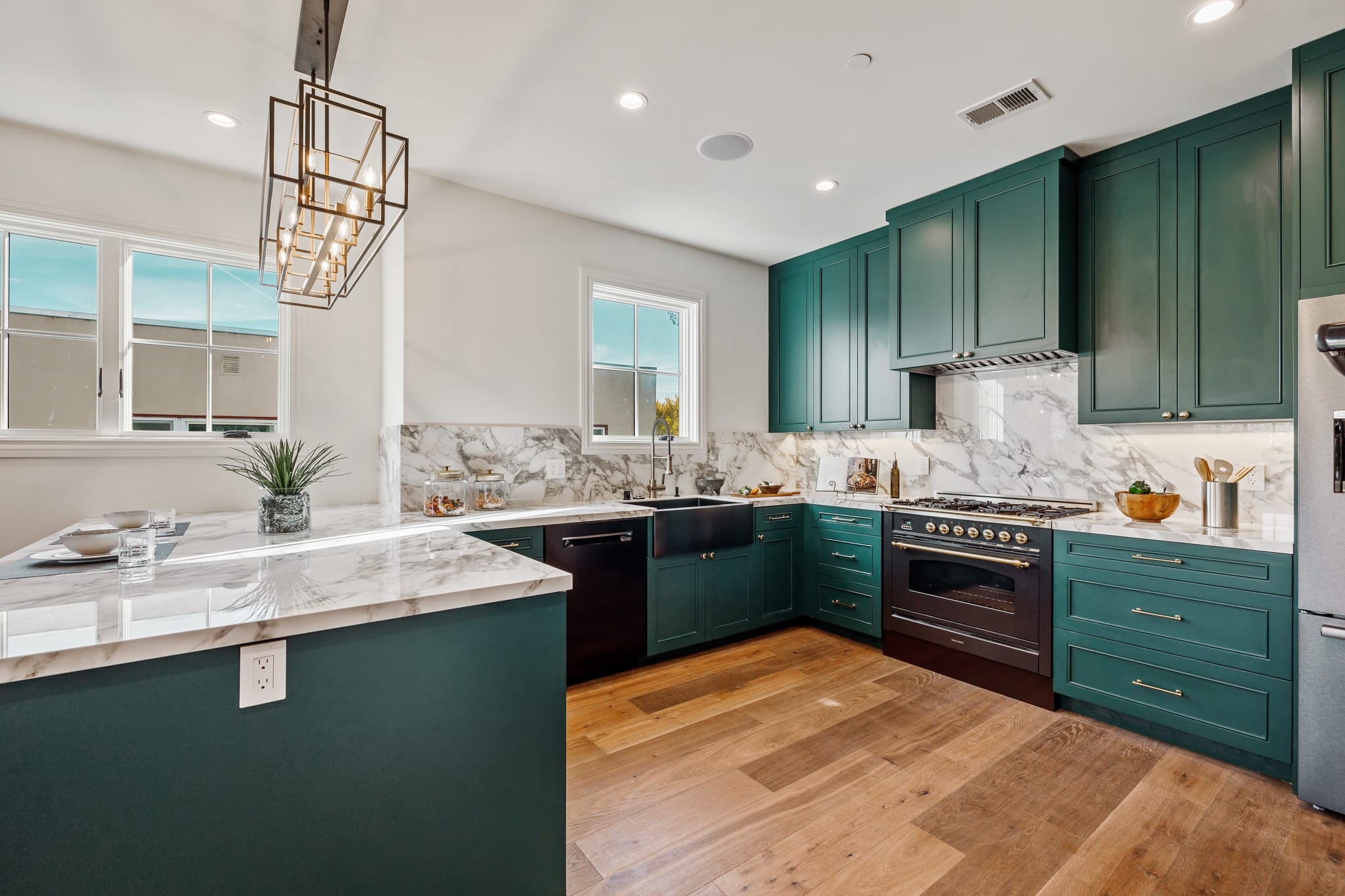
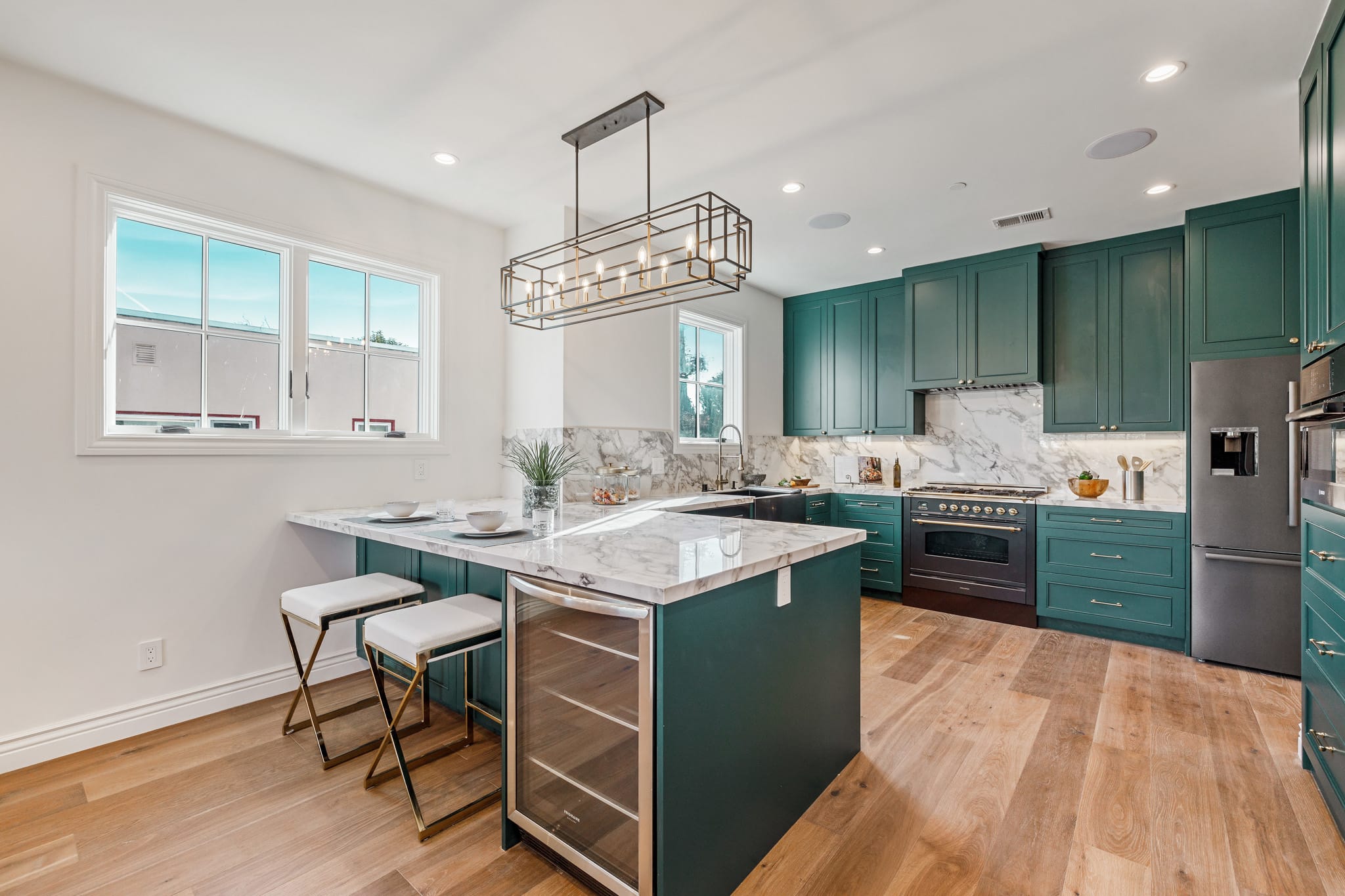
Conservative designers might encourage you to steer clear of bold cabinet colors when you have black appliances, warning that the combination is too overbearing. The kitchen at 115 Humboldt Road in Burlingame makes a strong case against that caution – when done correctly. Case-in-point: Humboldt’s teal sapphire cabinetry, paired with a matte black Italian Ilve range with brass hardware and a dramatic black farmhouse sink. It works because every other surface — the Calacatta marble backsplash and countertops, the white walls, the warm oak floors — exists purely to give the eye somewhere to rest.
The marble is doing more work than it appears. Its white-and-gray veining provides the visual exhale the space needs, and its cool undertones echo the black of the appliances without matching them exactly. The brass hardware unifies everything: it appears on the cabinetry, the range, and the faucet, creating a through-line that prevents the palette from fragmenting.
What makes this palette work:
- Bold cabinet colors need a large neutral surface — here, the marble backsplash acts as a reset between the cabinets and the eye.
- Warm wood floors are essential — without them, a dark-cabinet, black-appliance kitchen can feel cold regardless of the cabinet color.
- Repeat your hardware finish at least three places — cabinets, range, and faucet minimum — or the palette will feel unresolved.
What does a farmhouse kitchen with black appliances look like?
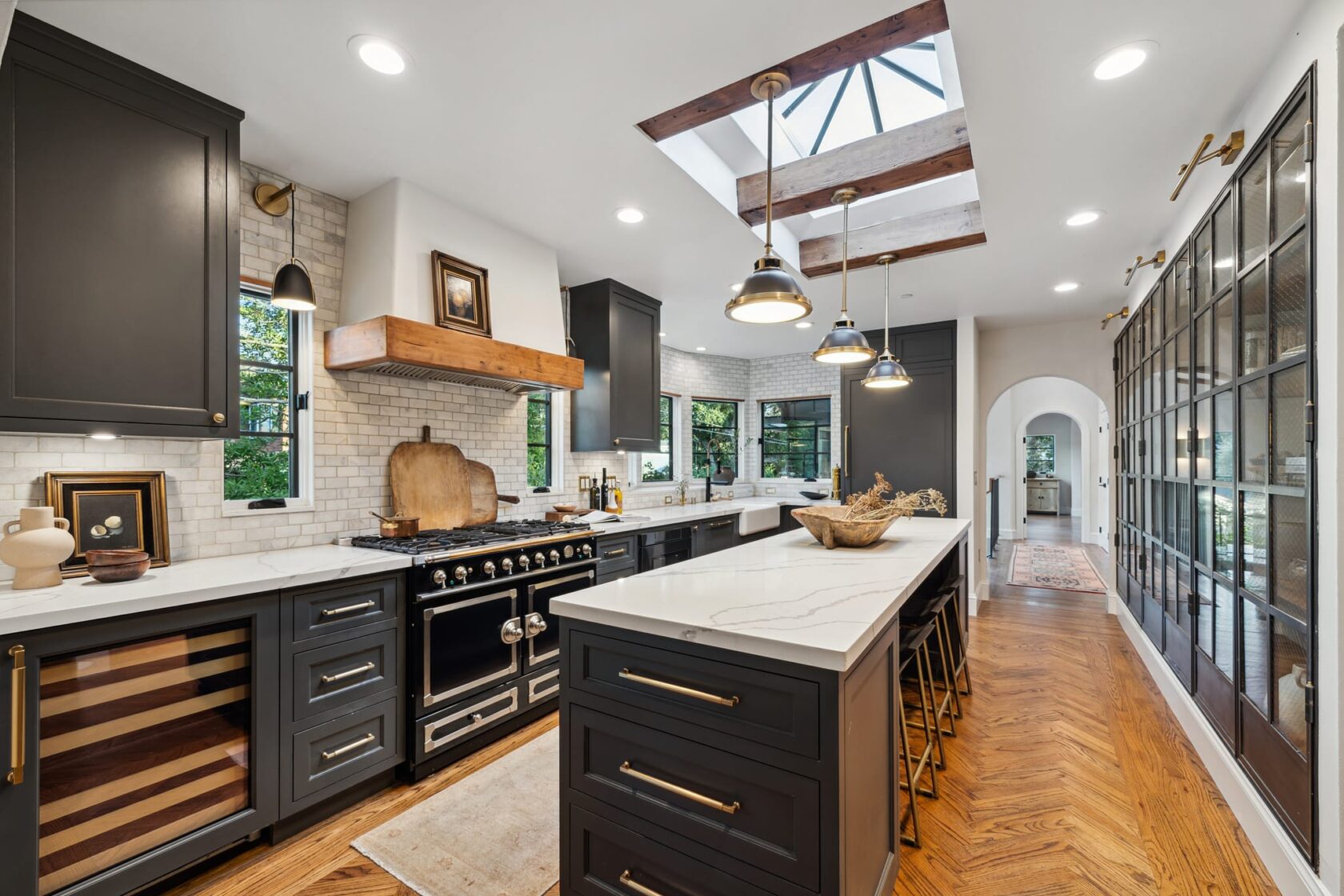
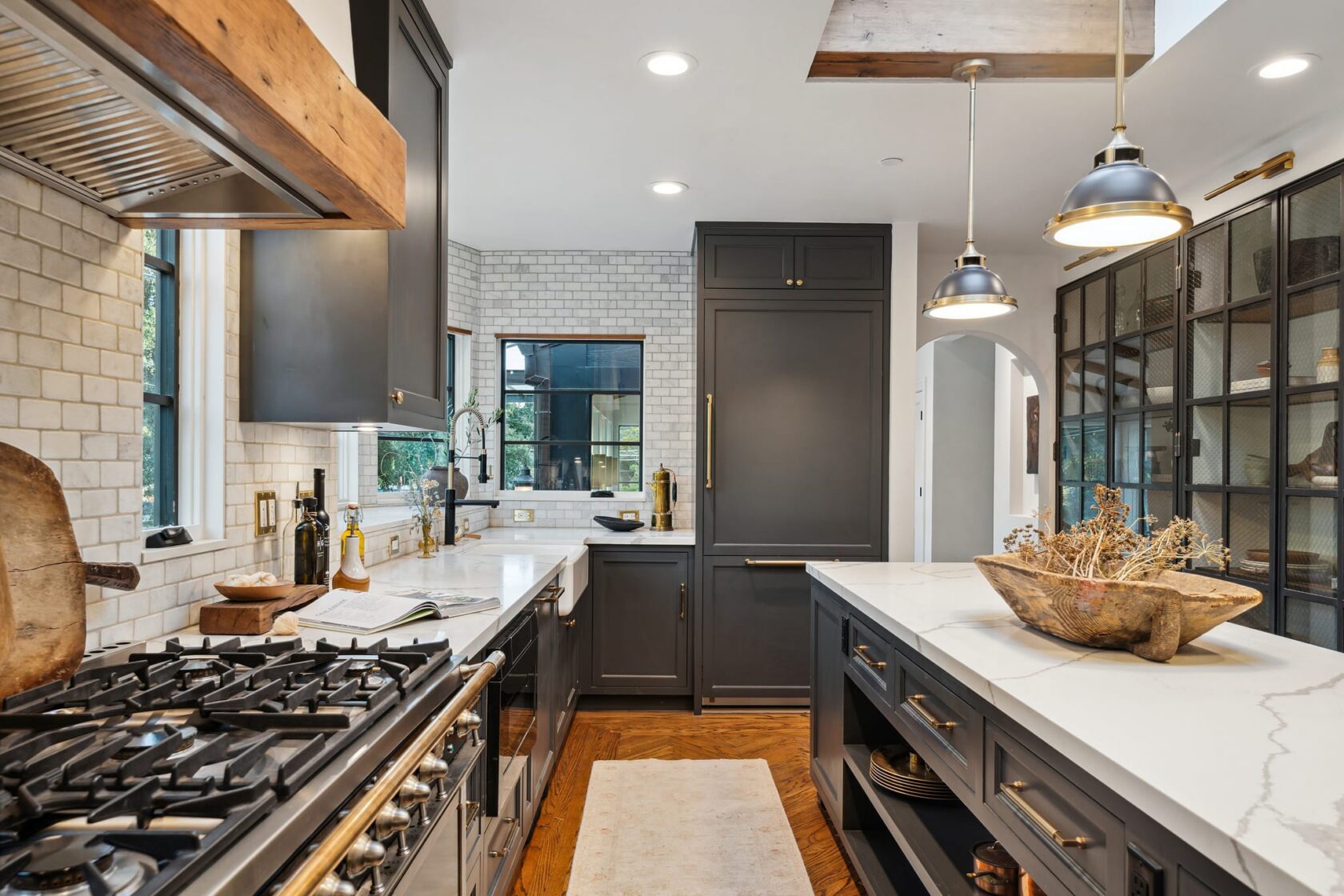
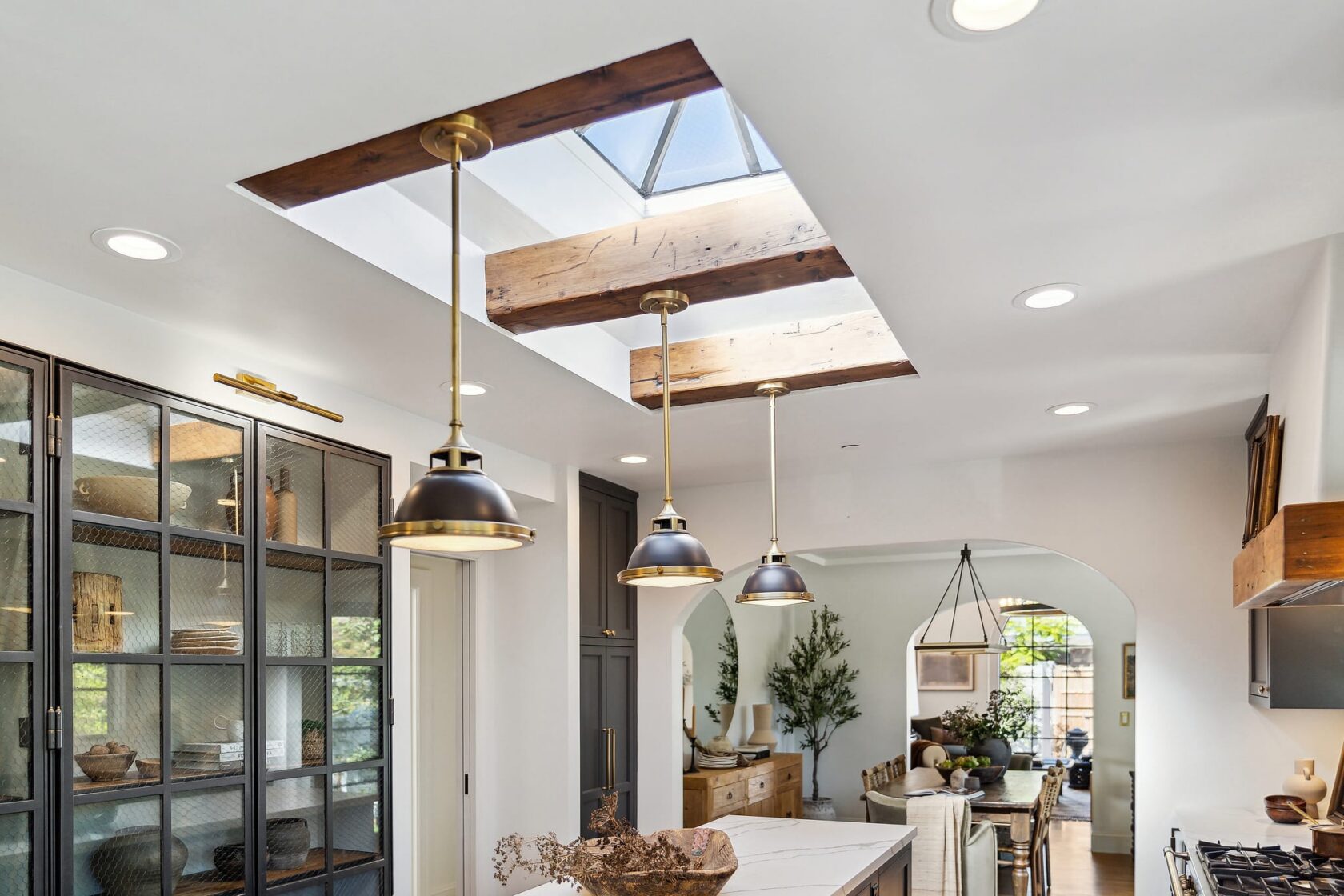
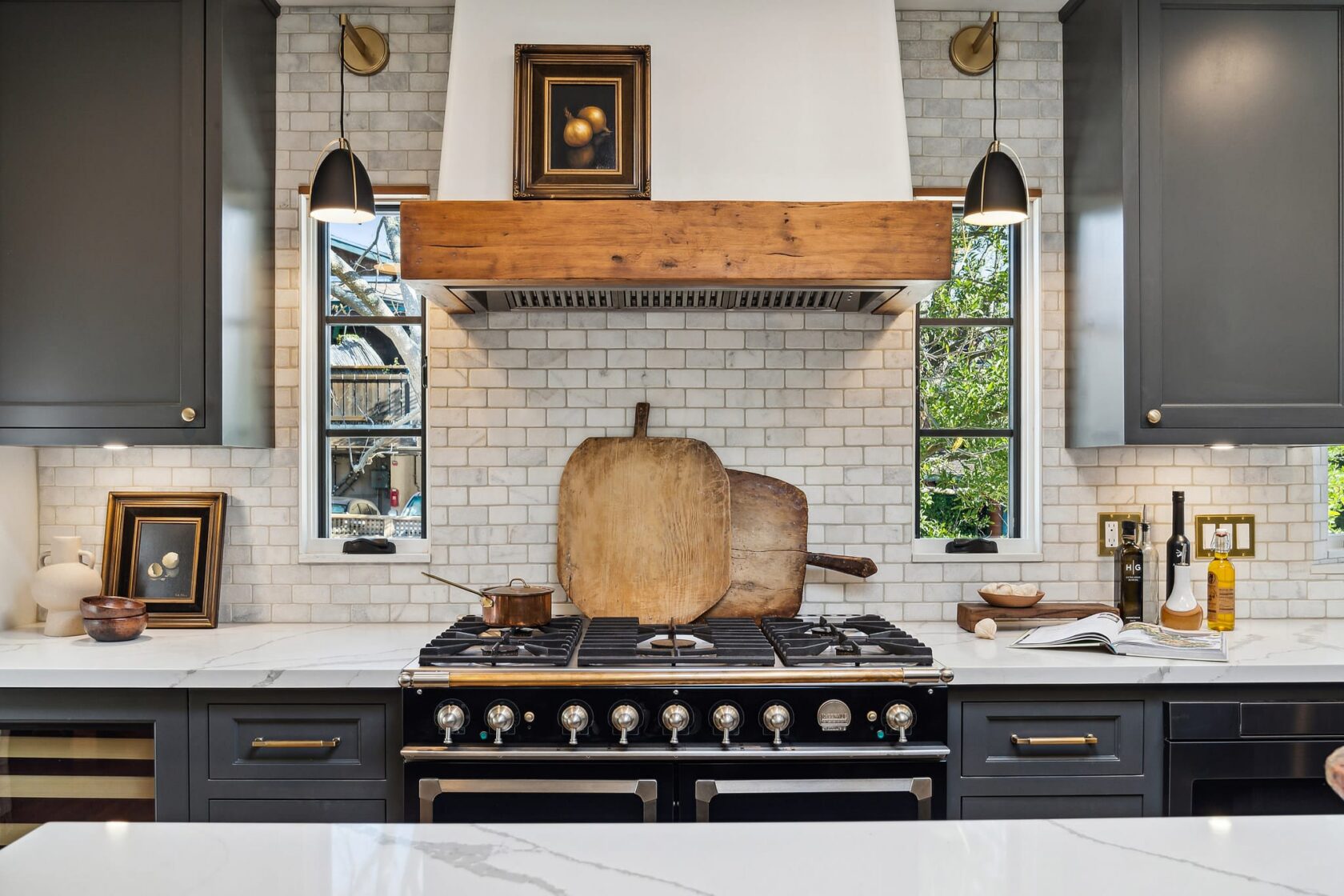
Black appliances read very differently depending on the hardware they carry. At 137 Oak Knoll Avenue in San Anselmo, a La Cornue and Gaggenau-equipped kitchen uses black as the foundation of a warm, layered farmhouse palette rather than a modern minimalist one. The La Cornue range is black, but its brass hardware, arched hood surround, and position within a 10-foot island kitchen make it feel more European country house than contemporary showroom.
Custom cabinetry in a deep, slightly glossy black-gray frames the range and anchors the space, while white counters and a light tile backsplash provide contrast without breaking the warmth of the palette. Natural wood tones — in the vent hood, open shelving, and cutting boards — do the work of softening what could otherwise read as severe. Gold hardware on the cabinetry reflects the brass of the range and creates the visual continuity that holds the whole composition together.
What makes this palette work:
- Brass and gold hardware transforms black appliances from modern to timeless — the metal finish determines the era the kitchen reads as, more than almost any other single choice.
- Wood tones are essential in a dark farmhouse kitchen — without them, the palette skews industrial rather than warm.
- A slightly glossy cabinet finish in a dark color reflects light in a way matte finishes don’t, preventing the space from absorbing too much light and feeling dim.
Selling a home with a show-stopping kitchen? See why we’re the best photography company in the Bay Area →
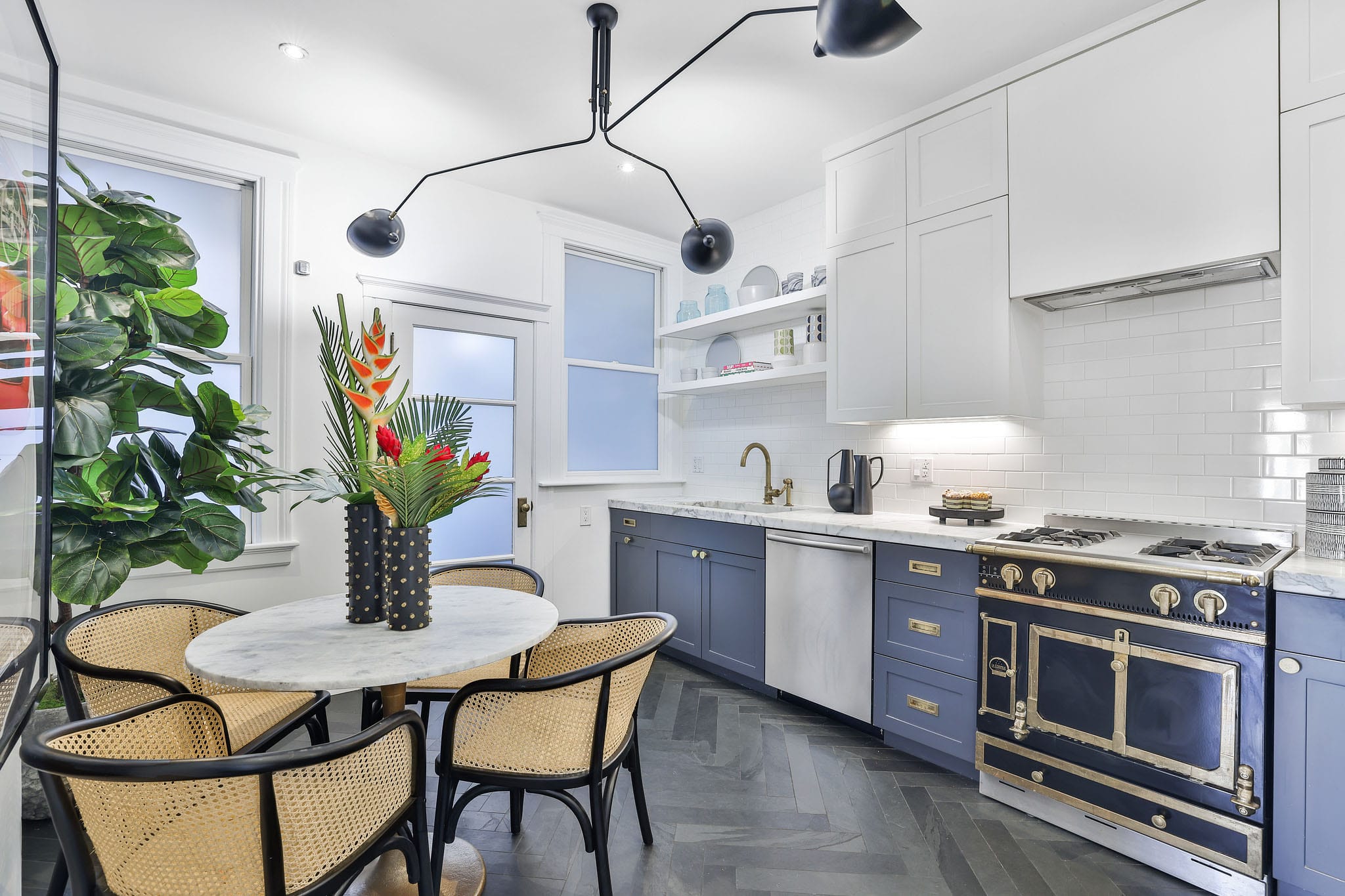
Does a dusty blue kitchen with black appliances actually work?
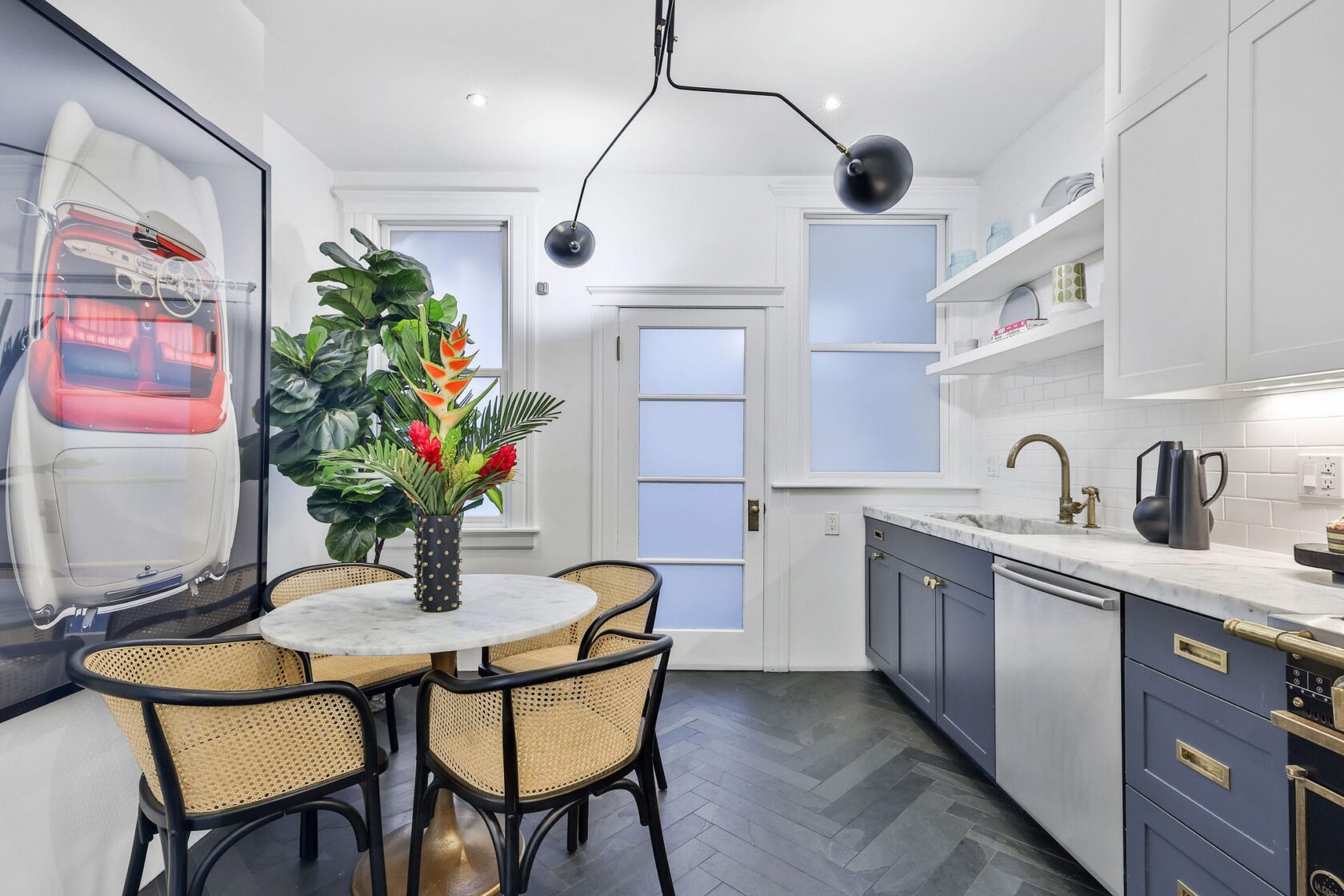
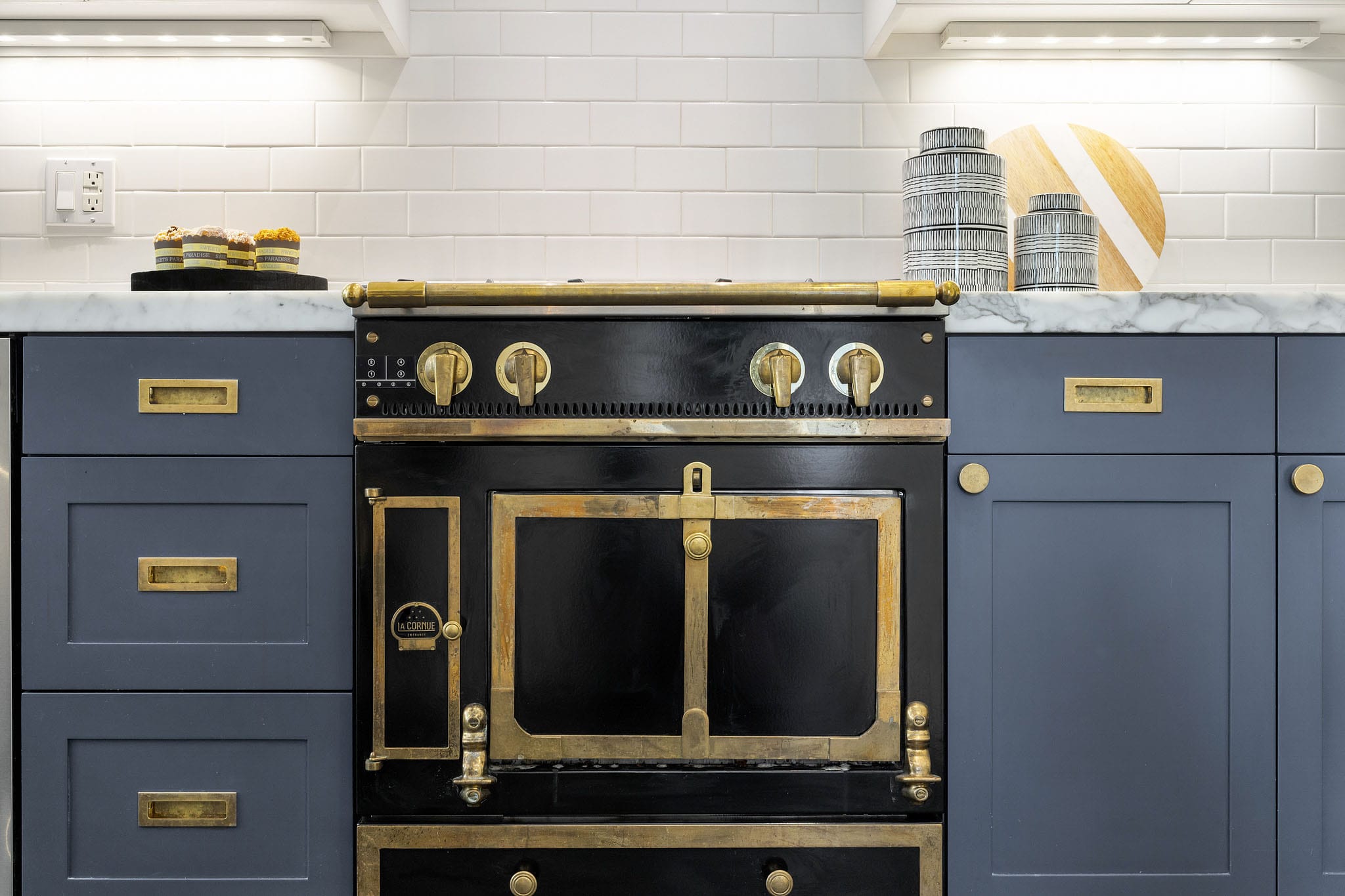
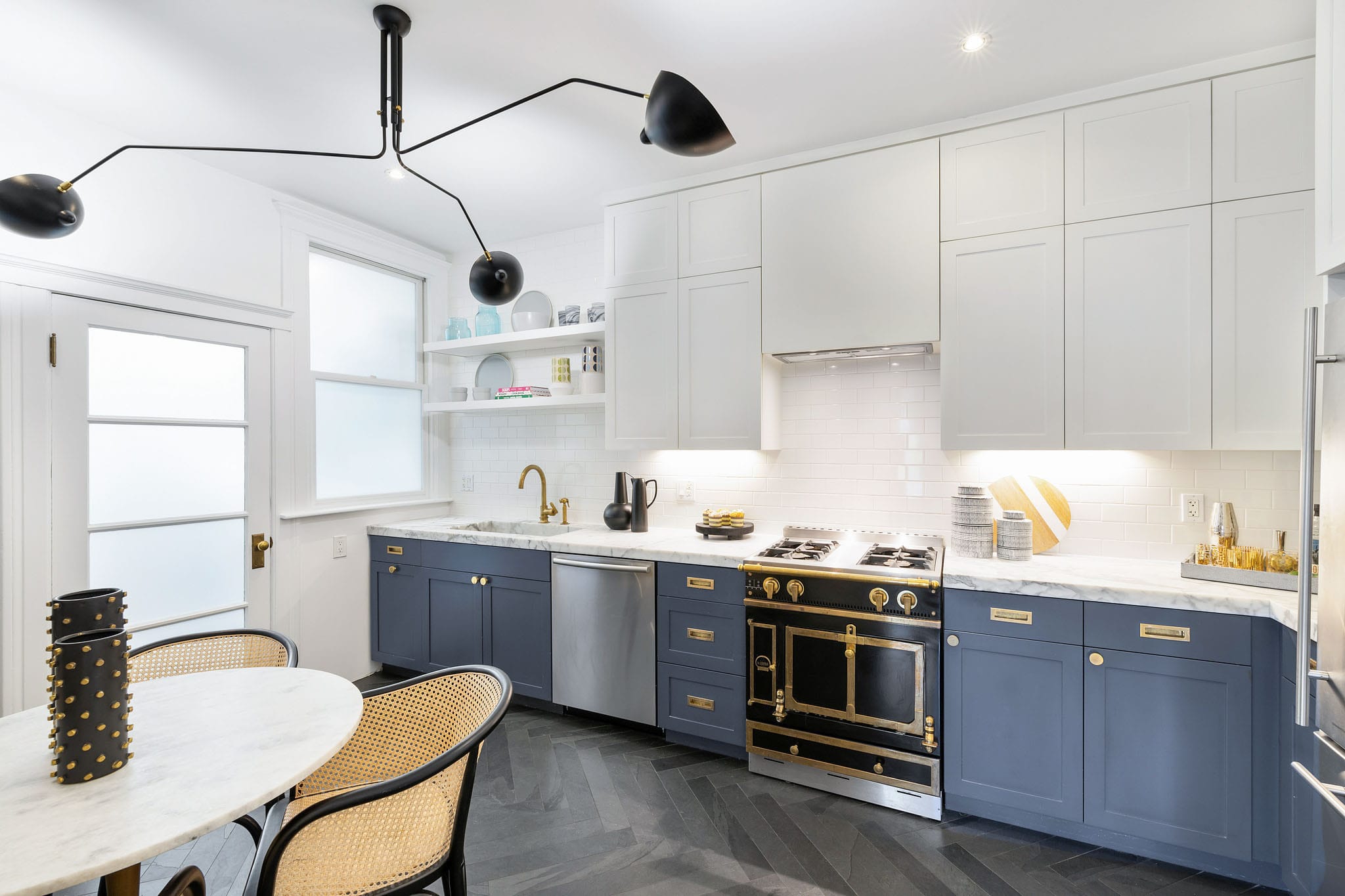
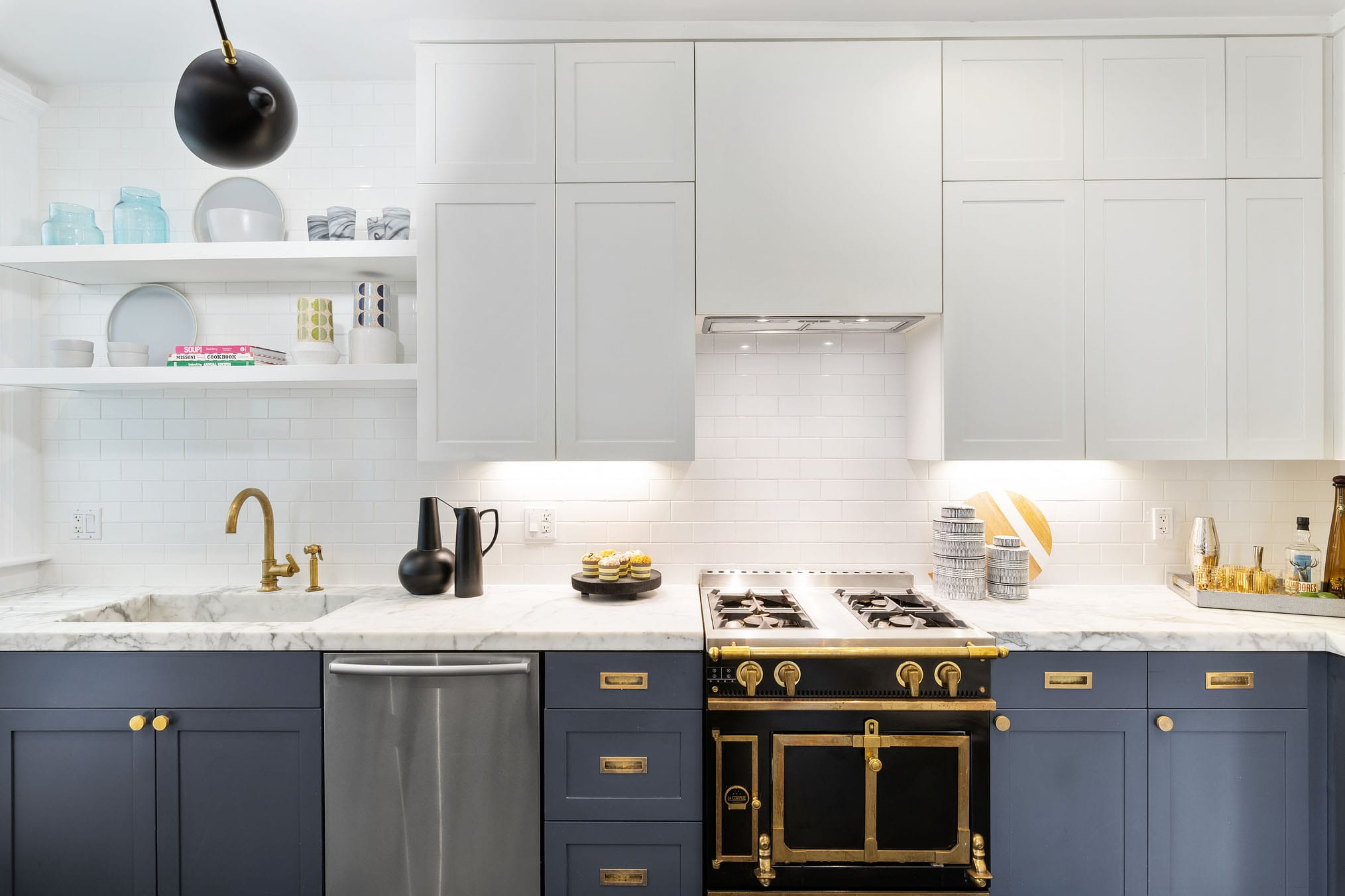
The short answer is yes — but the execution matters. At 204 Vicksburg Street in San Francisco, slate-blue lower cabinets pair with a black and brass La Cornue Château range in a way that feels collected rather than busy. The key is that the blue reads as a neutral here, not an accent. It has enough gray in it to sit quietly alongside the black appliances rather than competing with them.
White upper cabinets and Calacatta marble counters do the heavy lifting on contrast, keeping the palette from closing in. The herringbone slate floor ties the dark tones together underfoot without adding visual weight to the walls. Brass hardware throughout — on the cabinets, the range, and the faucet — acts as the connective thread that makes the whole composition feel intentional.
What makes this palette work:
- Choose a blue with strong gray undertones — pure navy can read too bold against black appliances; blue-gray reads as a sophisticated neutral.
- White upper cabinets are non-negotiable in a smaller kitchen — they maintain the ceiling height and keep the space from feeling top-heavy.
- Brass or unlacquered bronze hardware bridges blue cabinetry and black appliances more naturally than chrome or nickel.
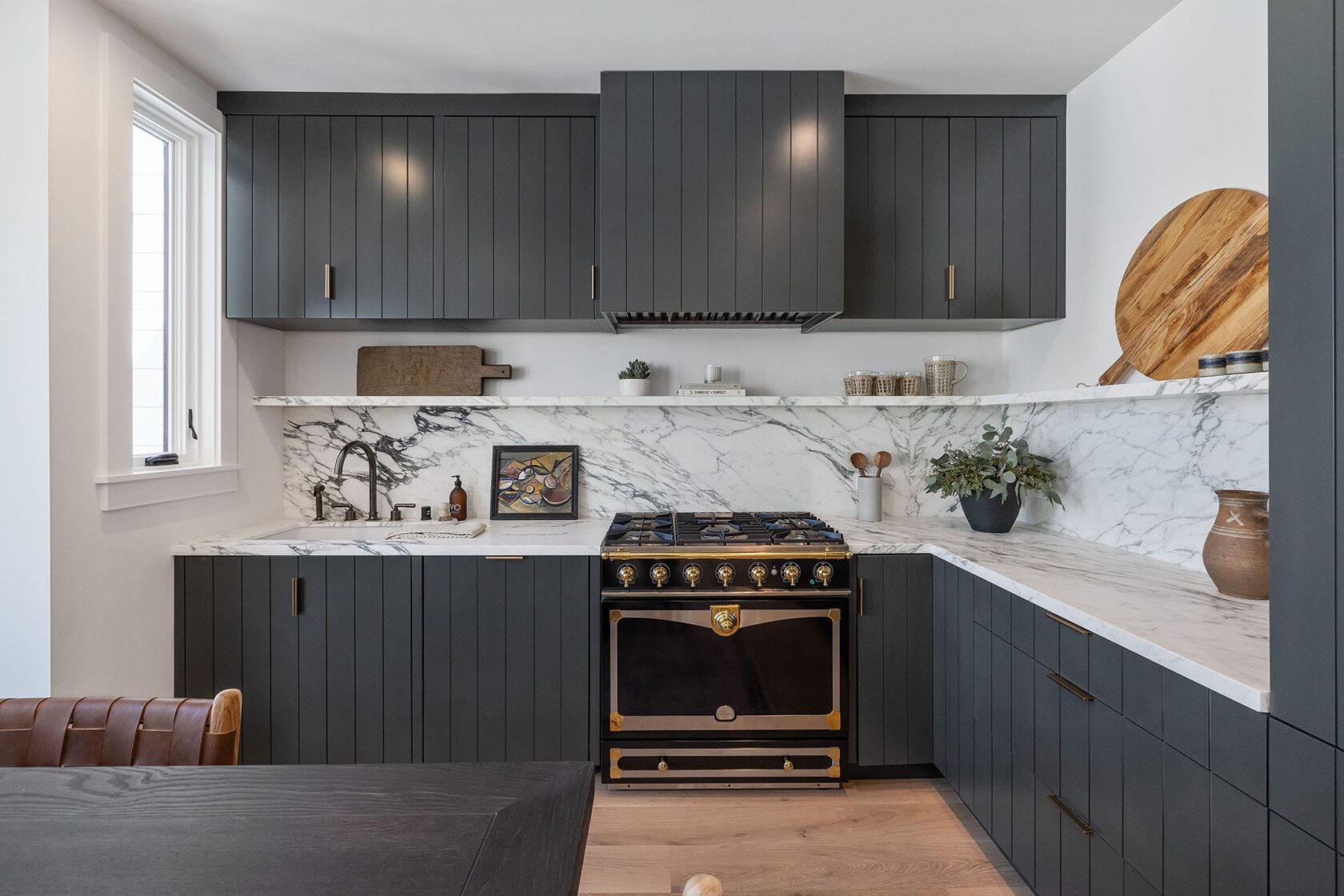
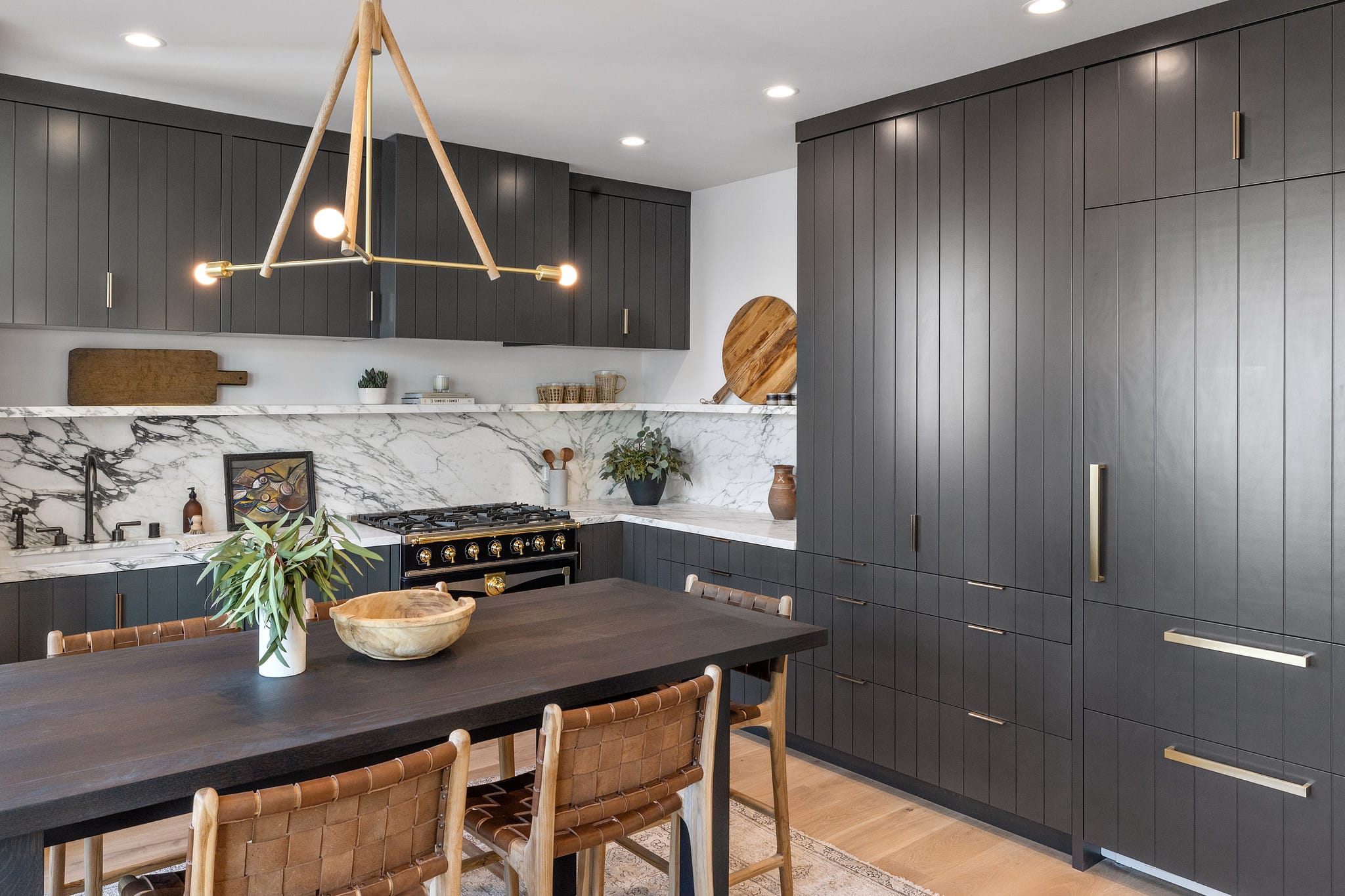
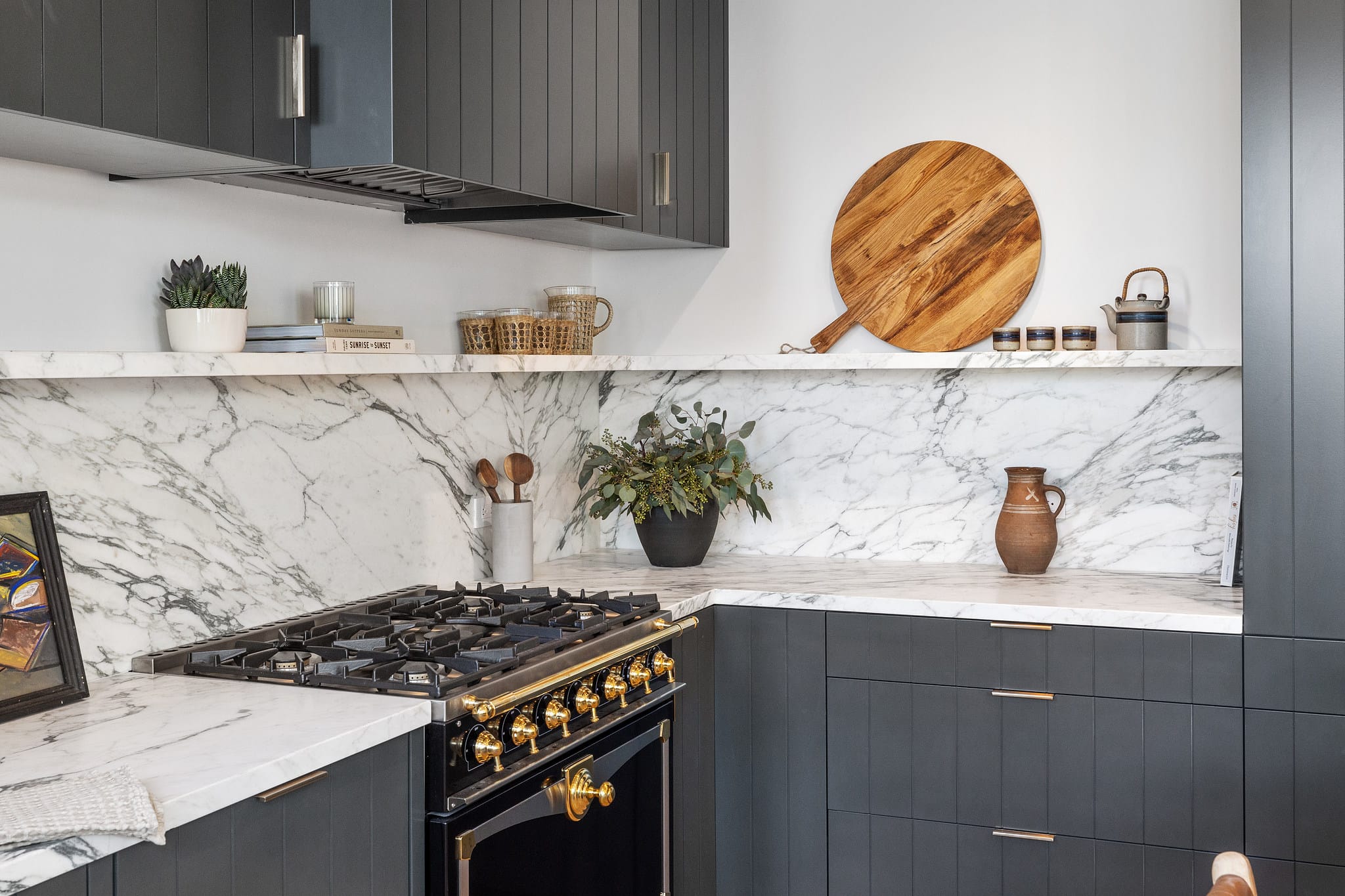
How do charcoal cabinets and white marble work with black appliances?
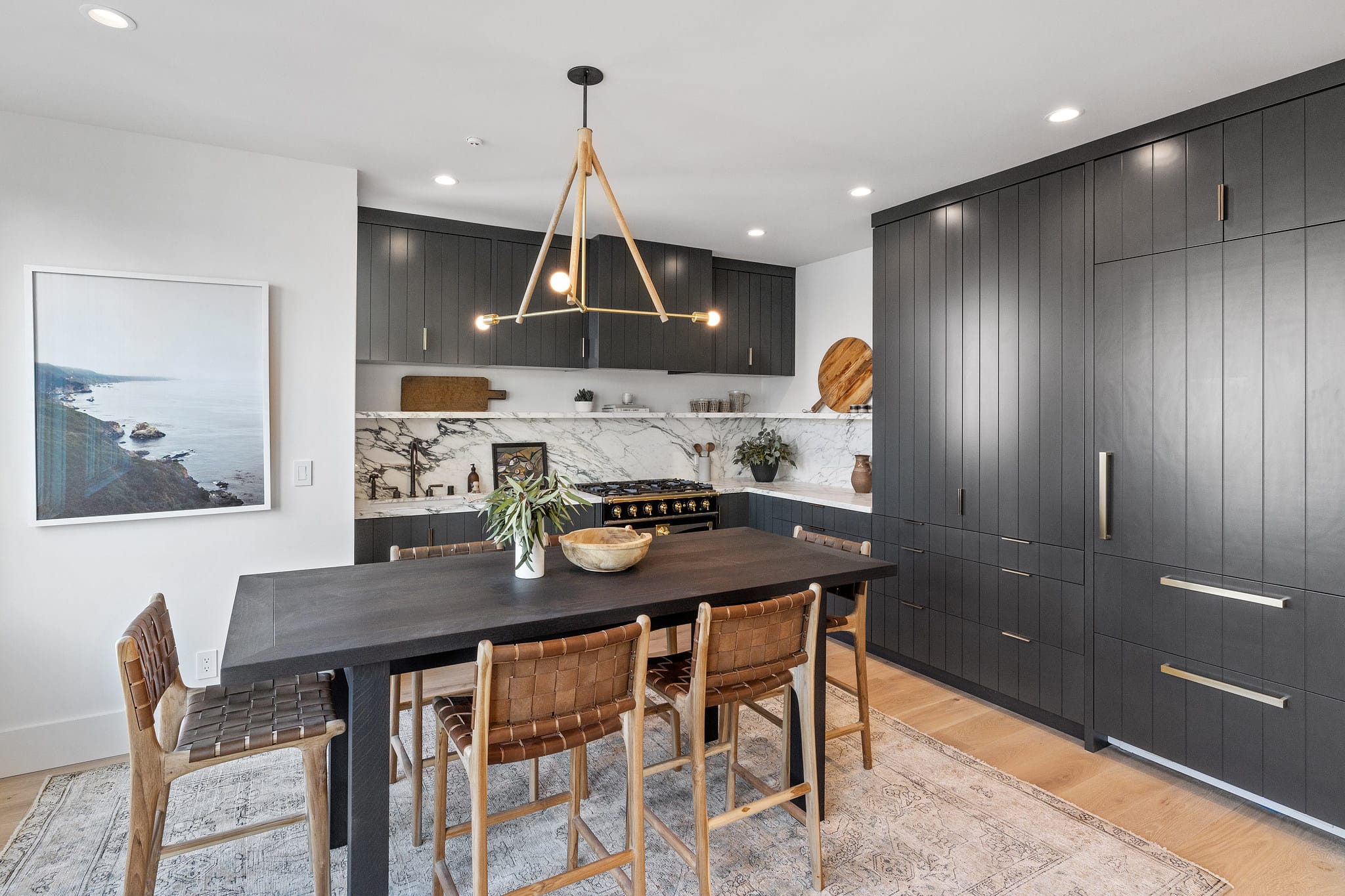
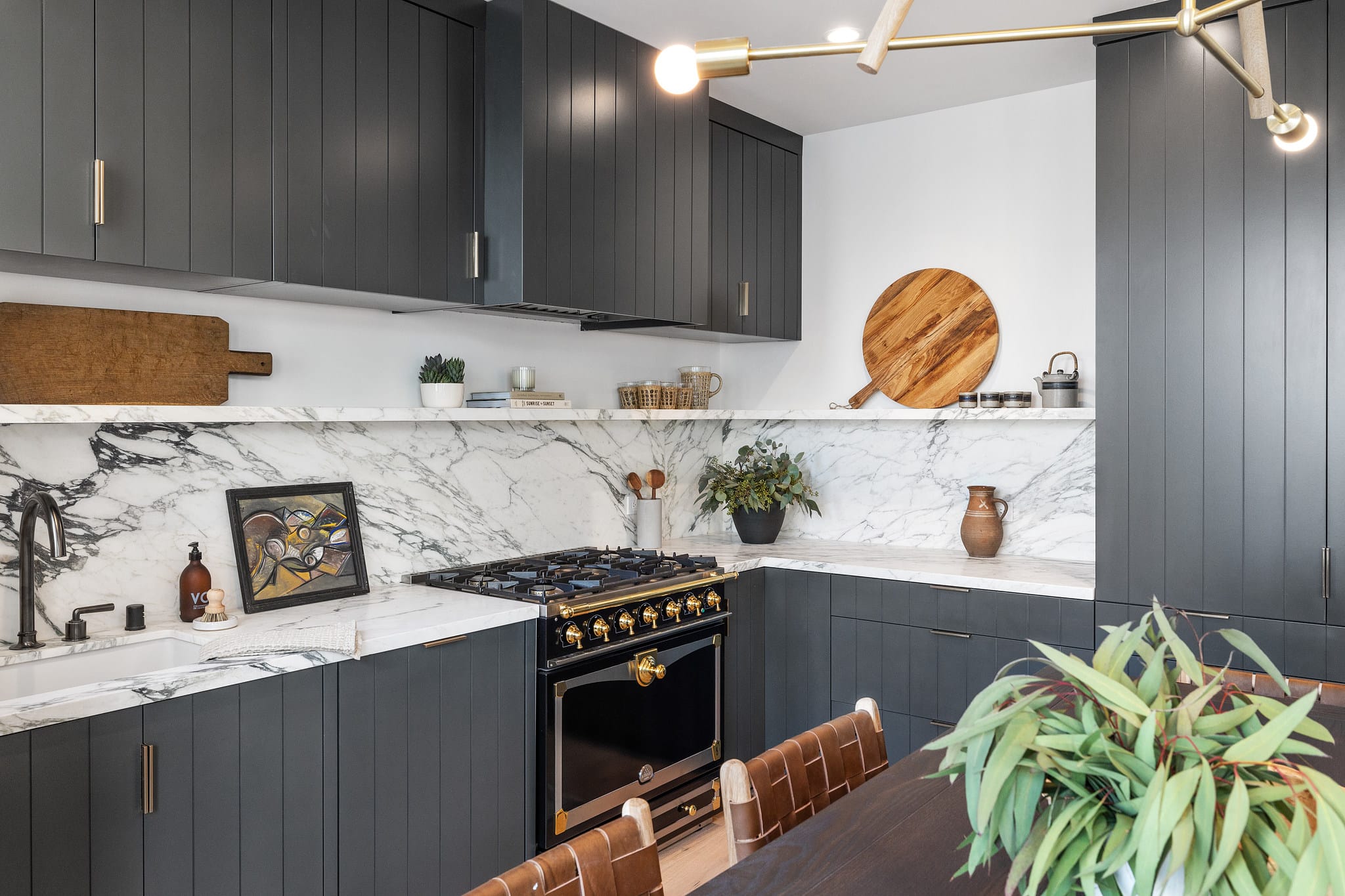
Charcoal cabinetry and black appliances is the combination that intimidates most homeowners — the assumption being that matching dark tones will swallow the room. The kitchen at 2032 Greenwich Street in San Francisco demonstrates why that fear is usually overstated. The Cornufé 90 Albertine range anchors the wall in black, and the charcoal shaker cabinets frame it without competing. The two dark tones read as a family rather than a collision because they share the same cool undertone.
What prevents the space from feeling heavy is the deliberate layering of light surfaces. Calcutta Macchia Vecchia and Monet marble countertops run the full length of the kitchen, and white subway tile carries that brightness up the wall. European white oak flooring adds warmth underfoot — a necessary counterweight to the cool gray-black palette above. The Sub-Zero refrigerator, panel-ready and recessed into the cabinetry, disappears entirely, letting the range take its rightful place as the focal point.
What makes this palette work:
- This kitchen matches the undertone, not the color — charcoal cabinets work with black appliances because both read cool; warm-toned dark cabinets could create tension instead of harmony.
- White marble countertops are the most effective contrast surface in a dark kitchen — the veining adds visual interest without introducing another color.
- One statement appliance is enough — the Cornufé range earns its prominence precisely because everything else steps back.
What does an all-white kitchen with black appliances look like?
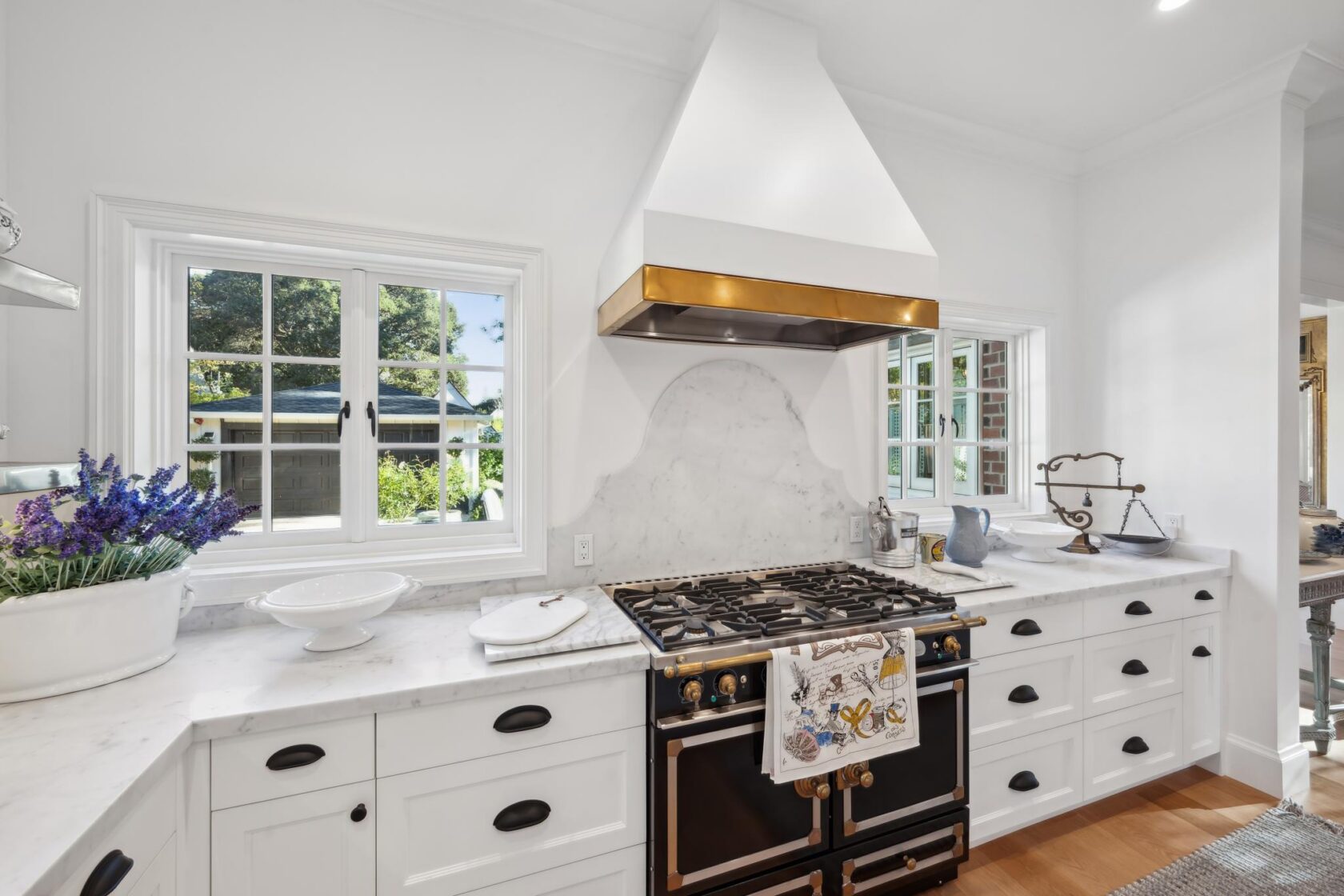
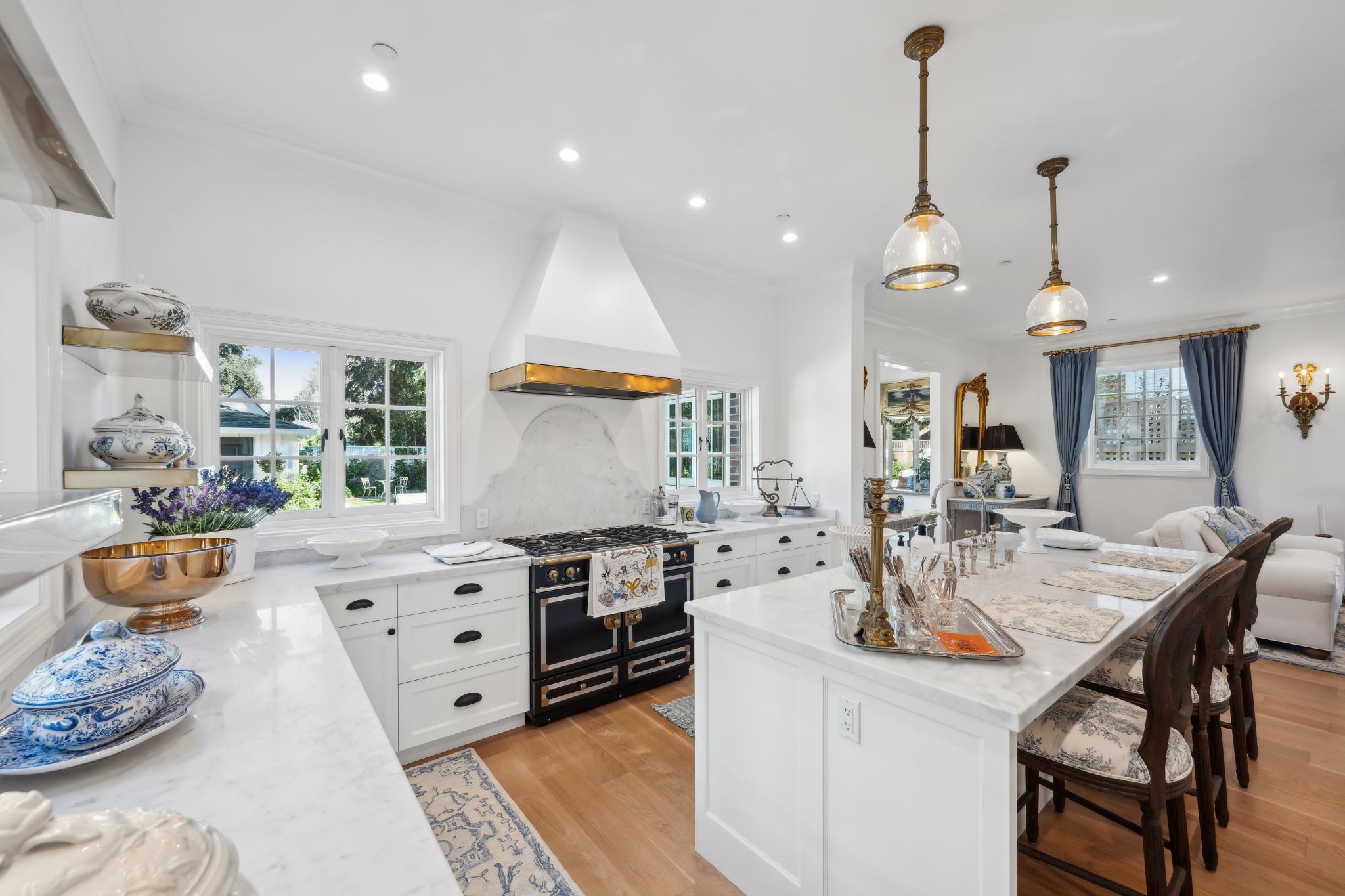
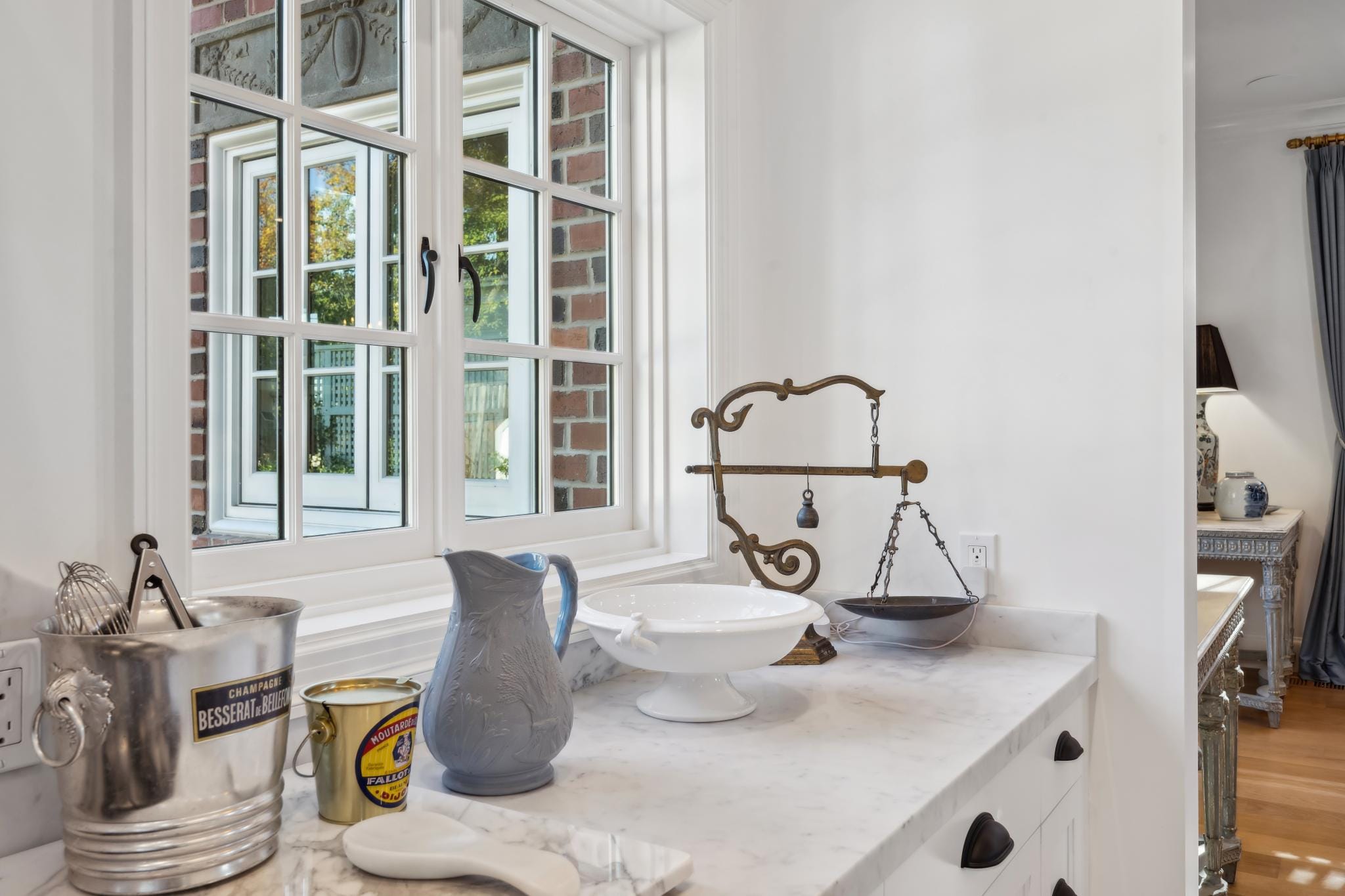
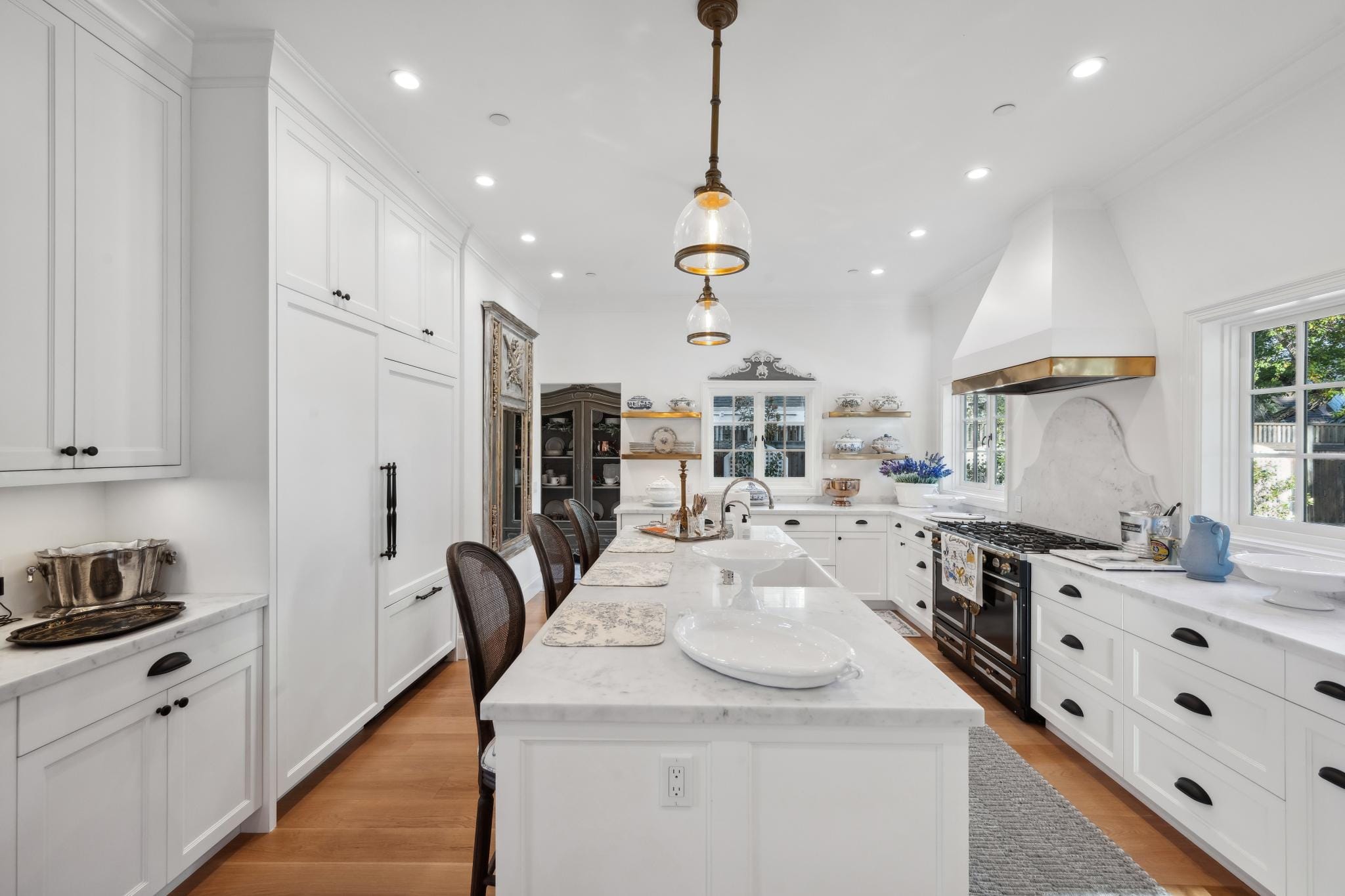
White cabinets with black appliances is the combination most people reach for — and most people get it slightly wrong by choosing the wrong black. At 853 D Street in Petaluma, the La Cornue range is black with aged brass hardware, and the warmth in the brass prevents the range from reading as a cold contrast element and instead anchors it in the French country aesthetic of the room.
White cabinets with black cup-pull hardware throughout give the kitchen feels refined, and consistent enough to feel intentional. Marble countertops and a farmhouse sink keep the palette soft rather than stark. With all elements working together, we’re left with a kitchen that feels timeless — not a generic white kitchen.
What makes this palette work:
- Black appliances in a white kitchen need warm metal accents — brass, bronze, or aged gold — to prevent the contrast from feeling clinical.
- Consistent black hardware on white cabinets amplifies the appliances rather than fighting them; it signals that the black is a deliberate design choice.
- Avoid high-gloss white cabinets here — a matte or eggshell finish reads as intentional; gloss reads as a kitchen that happens to have black appliances.
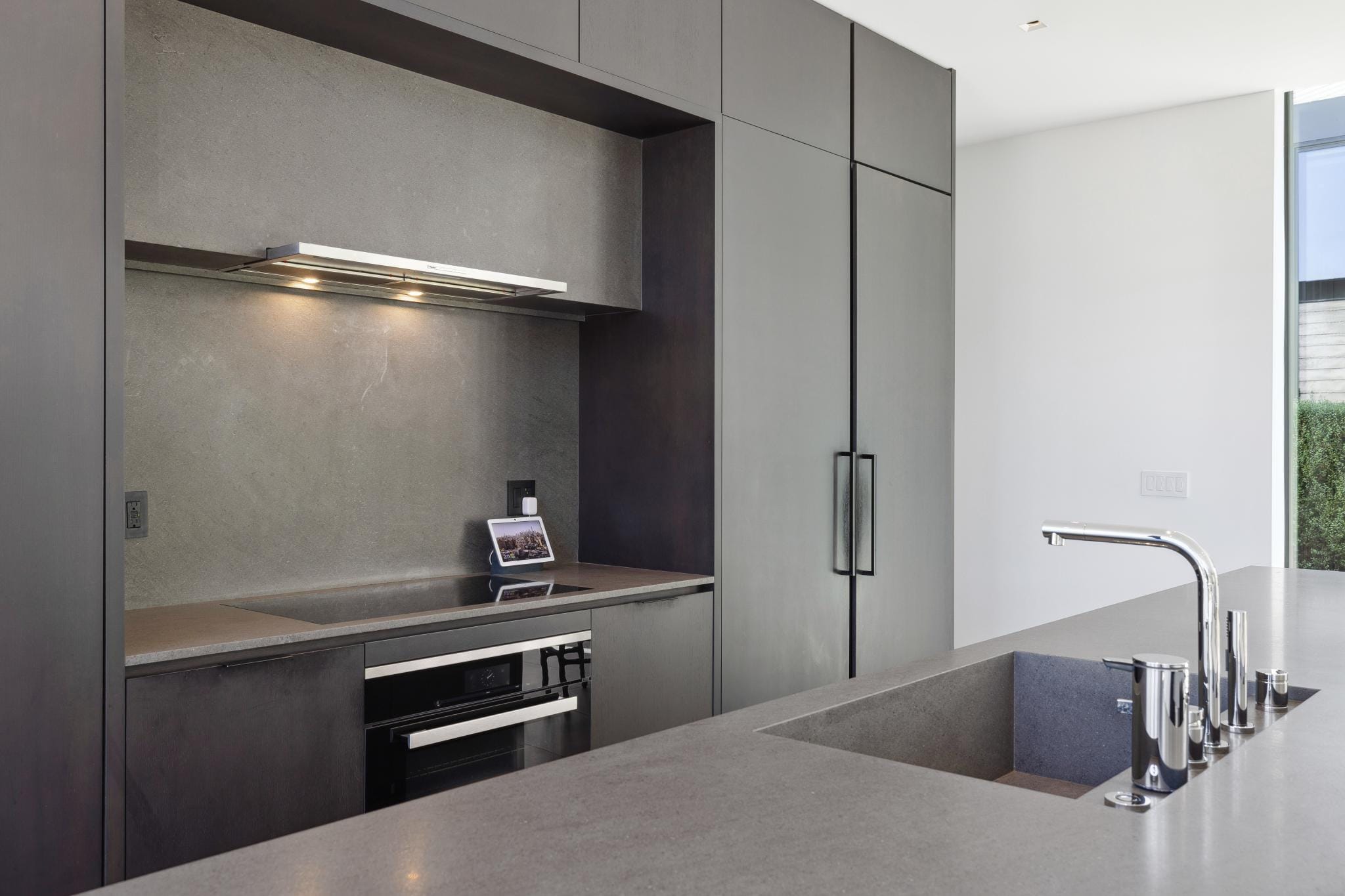
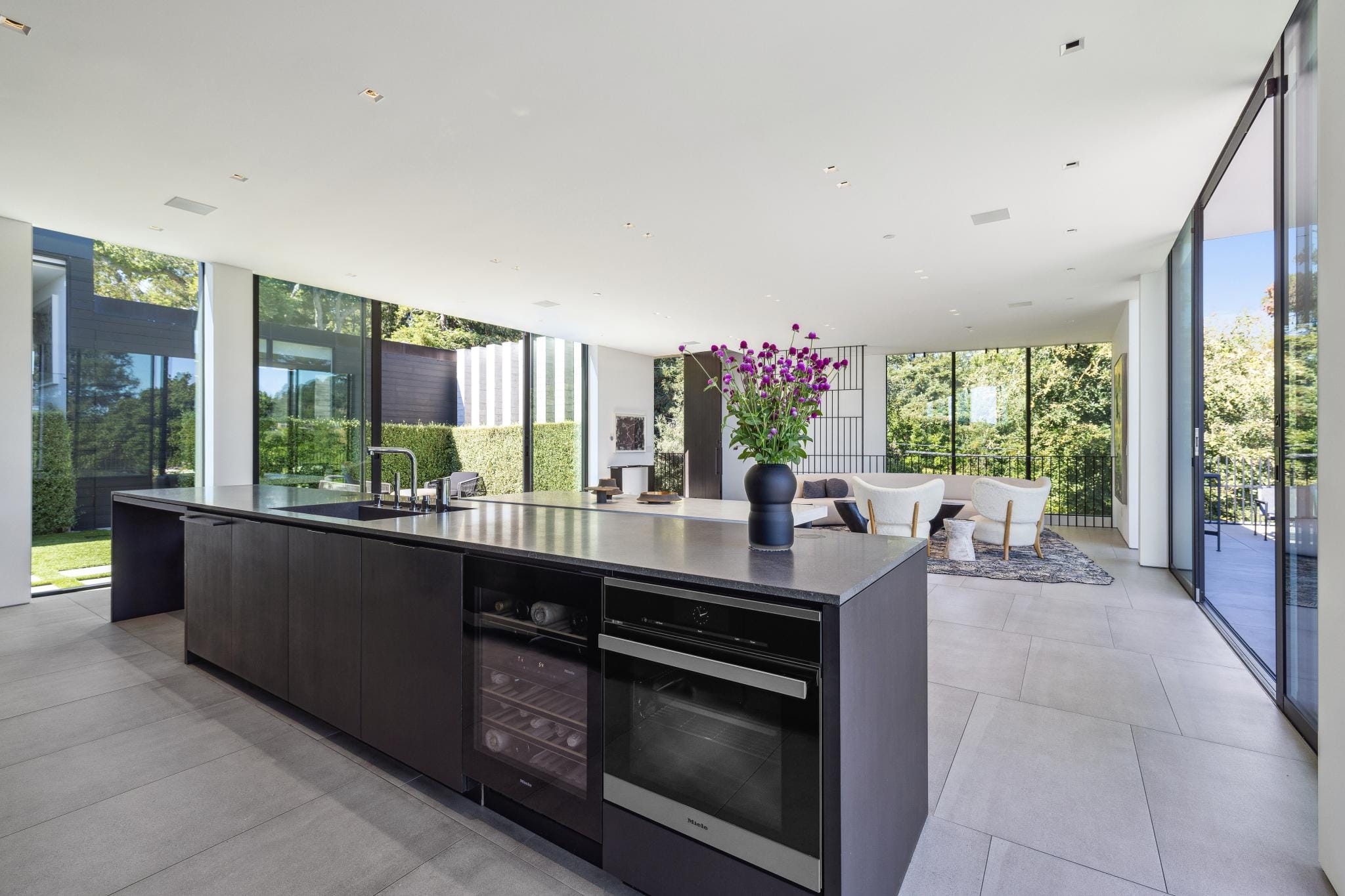
Can matte black cabinets and black appliances coexist in the same kitchen?
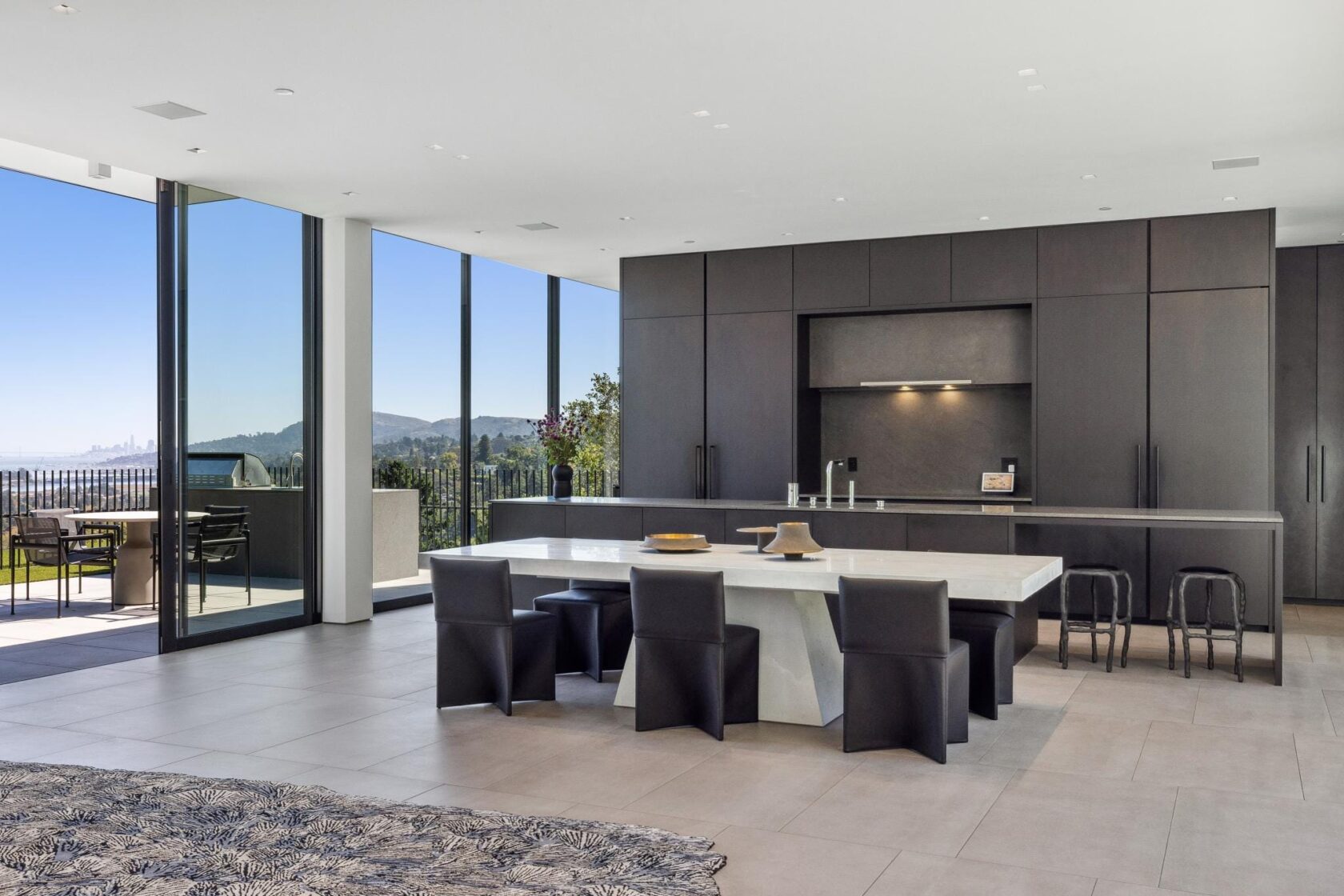
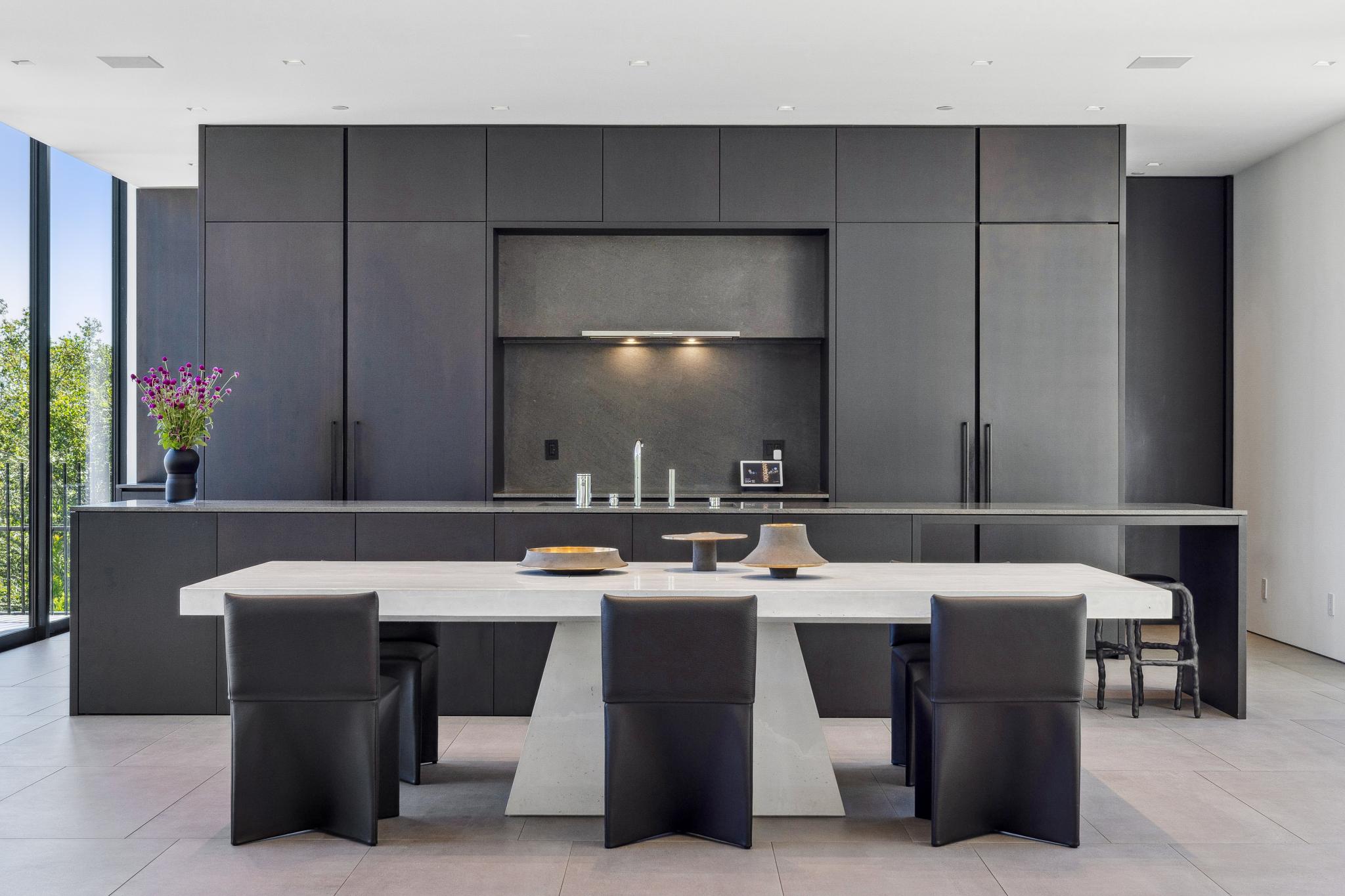
Designing with tone-on-tone darks requires either exceptional light or exceptional nerve. The kitchen at 185 Summit Avenue in Mill Valley has both. Floor-to-ceiling matte black cabinetry meets a Sub-Zero and Fisher & Paykel appliance suite in a room that faces unobstructed views of the San Francisco skyline and San Francisco Bay. The natural light flooding through those walls of glass is not incidental to the design — it is actually somewhat load-bearing. Without it, the palette would close in. With it, the kitchen feels serene.
The contrast comes from restraint rather than color. Light stone flooring, a white dining table in the adjacent space, and the views themselves provide the relief the eye needs. Nothing competes with the cabinetry and appliances — instead, the lighter elements give the dark palette room to breathe.
What makes this palette work:
- Tone-on-tone dark kitchens only work with abundant natural light — before committing to this palette, assess your kitchen’s light at multiple times of day.
- Keep adjacent spaces lighter — the visual exhale doesn’t have to happen within the kitchen itself; a lighter dining or living area provides sufficient relief.
- Stone or concrete flooring in a light tone grounds the space without introducing warmth that would fight the cool palette.
Better Homes & Gardens highlighted one of the gorgeous homes we’ve shot which features a stunning kitchen with black appliances. Click here to continue reading the article in Better Homes & Gardens or read on for some more examples of black appliances in kitchens and how to achieve a dramatic but timeless look.
Trying to pull off timeless black hues – but in the bathroom? Check out our article on Black Bathrooms and Black Vanities
If your next listing has a kitchen worth showing off, we’d love to shoot it. Order photography now or, if you’re just browsing, get a qu0te instantly.